
The Ultimate Guide to Neurosymbolic AI and Its Real-World Applications
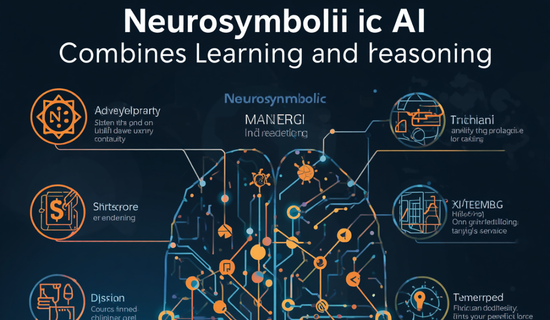
Artificial intelligence continues to change many industries. However, many AI models still face important limits. They learn from data, but they often struggle with reasoning. Neurosymbolic AI solves this problem by combining deep learning with symbolic reasoning.
Neurosymbolic AI brings together the strengths of neural networks and rule-based systems. As a result, AI becomes smarter, more reliable, and easier to understand. Many experts believe this approach will shape the future of intelligent systems.
This guide explains how it works, why it matters, and where businesses use it today.
“The future of AI lies in combining learning with reasoning.”
What Is Neurosymbolic AI?
Neurosymbolic AI combines two different AI methods. Moreover, it brings them together in one system.
Firstly, neural networks learn from large amounts of data. They recognize images, speech, and patterns.
On the other hand, symbolic AI uses rules and logic. It solves problems through reasoning and knowledge.
Instead of choosing one approach, developers combine both. Therefore, AI becomes more flexible and dependable.
READ MORE : AI for Supply Chain: Best Practices and Future Opportunities
Does Neurosymbolic AI Work?
The system has two main parts. First, the first part learns from data.
In addition, it detects patterns using neural networks.
Meanwhile, the second part applies logical rules. It makes decisions through symbolic reasoning.
Both parts work together during problem solving.
For example, an AI system may identify an object in an image. Next, symbolic rules explain what the object means.
This process improves decision-making.
Table 1: Neural AI vs Symbolic AI
| Feature | Neural AI | Symbolic AI |
|---|---|---|
| Learning | Learns from data | Uses rules |
| Reasoning | Limited | Strong |
| Transparency | Low | High |
| Training | Needs large datasets | Needs expert knowledge |
| Flexibility | High | Moderate |
Why Is Neurosymbolic AI Important?
Modern AI often acts like a black box. As a result, users cannot always understand its decisions.
However, neurosymbolic AI improves transparency. It explains why decisions happen.
Therefore, businesses trust systems that provide clear answers.
Moreover, better reasoning reduces mistakes.
This combination supports safer AI in many industries.
Key Features of Neurosymbolic AI
Several features make this technology unique.
- Neurosymbolic AI combines learning and reasoning. As a result, it improves decision accuracy.
- Moreover, it explains AI decisions clearly.
- In addition, it learns from both data and knowledge.
- Furthermore, it handles complex tasks effectively.
- Finally, it supports better automation.
These features help organizations build trustworthy AI systems.
Benefits of Neurosymbolic AI
Organizations gain many advantages from this technology.
Better Accuracy
Learning and reasoning improve prediction quality.
Therefore, systems make fewer mistakes.
Faster Problem Solving
Logical reasoning speeds up complex decisions.
Consequently, businesses save valuable time.
Lower Data Requirements
Traditional AI needs huge datasets.
However, neurosymbolic AI often performs well with less data.
Better Adaptability
The system combines experience with logical knowledge.
As a result, it adapts to changing situations.
READ MORE : AI Governance Best Practices to Build Trust in AI Systems

Applications of Neurosymbolic AI
Many industries already explore this technology.
Healthcare
Doctors use AI to support diagnosis. Meanwhile, logical reasoning checks medical knowledge.
In addition, learning models analyze patient data.
As a result, together they improve treatment decisions.
Finance
Banks detect fraud faster.
Moreover, reasoning verifies suspicious activities.
In addition, learning models recognize unusual patterns.
As a result, this reduces financial risks.
Manufacturing
Factories monitor machines.
AI predicts failures before breakdowns happen.
Reasoning selects the best maintenance actions.
Education
Learning platforms personalize lessons.
Meanwhile, reasoning adjusts study plans.
As a result, students receive better learning support.
Cybersecurity
.Security teams detect attacks quickly.
In addition, AI analyzes network behavior.
Meanwhile, logical rules confirm threats.
As a result, false alerts decrease.
Common Components
Every neurosymbolic AI system includes important components.
Neural network models
- Neurosymbolic AI includes several key components.
- Firstly, it uses neural network models.
- In addition, it includes knowledge graphs.
- Moreover, it relies on rule engines.
- Meanwhile, logical reasoning modules support decision-making.
- Furthermore, machine learning algorithms improve learning ability.
- Finally, decision systems combine all outputs for final results.
Each component supports smarter AI decisions.
READ MORE : AI Contact Center Security and Privacy
Challenges of Neurosymbolic AI
Although the technology offers many benefits, several challenges remain.
Complex Development
Building two AI systems together takes effort.
Developers need different skills.
Higher Costs
Development may require additional resources.
This increases project costs.
Integration Issues
However, combining learning with reasoning is not always simple. Therefore, systems need careful design.
Limited Standards
Many companies still test different methods.
Industry standards continue to evolve.
Table 2: Benefits and Challenges
| Benefits | Challenges |
|---|---|
| Better accuracy | Complex design |
| Improved reasoning | Higher costs |
| Clear explanations | Integration difficulty |
| Less data needed | Limited standards |
| Better trust | Skilled experts required |
“AI becomes stronger when it learns and reasons together.”
Neurosymbolic AI vs Traditional AI
Traditional AI mainly focuses on learning patterns.
It performs well with large datasets.
However, it often cannot explain decisions.
Neurosymbolic AI combines learning with logic.
Therefore, it provides better explanations.
It also handles complex reasoning tasks more effectively.
Many experts believe this approach will improve future AI systems.
READ MORE : AI for Cybersecurity: Faster Detection and Better Defense
The Basics of Neurosymbolic AI
Neurosymbolic AI is a branch of artificial intelligence. It joins neural networks and symbolic reasoning into one system.
Neural networks learn from large amounts of data. They recognize patterns and improve over time. In contrast, symbolic AI uses rules and logic to solve problems.
When these methods work together, AI gains new abilities. It can learn from experience and explain its decisions.
Main Components
| Component | Purpose |
|---|---|
| Neural Networks | Learn patterns from data |
| Symbolic Reasoning | Apply logic and rules |
| Knowledge Base | Store structured information |
| Inference Engine | Generate conclusions |
Because of this combination, systems become more accurate and reliable.

Why Businesses Need Neurosymbolic AI
Modern AI applications require more than pattern recognition. They also need reasoning skills.
For example, a healthcare system may detect symptoms through data analysis. However, it must also connect those symptoms logically. Therefore, neurosymbolic AI offers a practical solution.
Some key reasons for its growing popularity include:
- As a result, neurosymbolic AI improves decision-making.
- Moreover, it increases transparency in AI systems.
- In addition, it provides stronger reasoning abilities.
- Furthermore, it reduces dependence on large datasets.
- Finally, it makes error detection easier.
As a result, organizations can build trustworthy AI systems.
READ MORE : Data Sovereignty Guide: How to Stay Compliant and Secure
Neurosymbolic AI Framework
The process begins with data collection. Neural networks analyze information and identify patterns.
Next, symbolic reasoning evaluates the findings. It applies logical rules and existing knowledge.
Finally, both outputs combine to create a decision. This method improves accuracy and understanding.
For instance, an AI assistant may recognize a user’s request through learning models. Then, symbolic logic helps determine the correct response.
Therefore, the system performs tasks more effectively.
“Learning without reasoning is limited. Reasoning without learning is incomplete.”
Key Benefits
Better Accuracy
Neural networks sometimes make mistakes. Symbolic reasoning helps reduce those errors.
Consequently, decisions become more dependable.
Greater Transparency
Many AI systems act like black boxes. Users often cannot understand their decisions.
However, neurosymbolic AI can explain the reasoning behind outcomes. This feature builds trust.
Faster Problem Solving
The combination of learning and logic speeds up decision-making.
As a result, organizations can improve productivity.
Strong Adaptability
The system learns from new data while following logical rules.
Therefore, it can handle changing situations more effectively.

Applications of Neurosymbolic AI
Many industries are exploring neurosymbolic AI solutions.
Healthcare
For example, doctors use AI tools to support diagnosis. First, learning models analyze medical records. Then, symbolic reasoning connects symptoms with treatments. As a result, healthcare professionals can make more informed decisions.
As a result, healthcare decisions become more accurate.
Finance
Banks process large amounts of information daily.
AI systems detect fraud patterns. Meanwhile, symbolic rules verify suspicious activities.
Therefore, financial institutions improve security.
Education
Educational platforms personalize learning experiences.
AI studies student performance data. Then, reasoning systems recommend suitable lessons.
Consequently, students receive better support.
Manufacturing
Factories use AI to improve operations.
Learning models monitor equipment performance. Logic systems identify maintenance needs.
Thus, downtime decreases significantly.
READ MORE : AI Business Ideas to Start Online and Scale Quickly
Challenges of Neurosymbolic AI
Although promising, this technology faces several challenges.
Integration Complexity
However, combining neural and symbolic systems is not simple. Developers must ensure that both parts work together smoothly.
Data Quality
Poor-quality data can reduce performance.
Therefore, organizations must maintain accurate datasets.
High Development Costs
Building advanced AI systems requires investment.
As a result, smaller companies may face budget limitations.
Scalability Issues
Large systems can become difficult to manage.
However, ongoing research continues to improve scalability.
READ MORE : AI Tracking Explained: Everything You Need to Know
Comparing AI Approaches
| Feature | Neural AI | Symbolic AI | Neurosymbolic AI |
|---|---|---|---|
| Learning Ability | High | Low | High |
| Logical Reasoning | Limited | Strong | Strong |
| Transparency | Low | High | High |
| Adaptability | High | Moderate | High |
| Decision Quality | Good | Good | Excellent |
This comparison shows why neurosymbolic AI attracts significant interest.
Future Potential
Researchers continue to improve neurosymbolic AI systems. New methods are emerging every year.
Furthermore, businesses are investing heavily in advanced AI solutions. These investments support innovation and growth.
Experts believe future AI systems will combine learning and reasoning more effectively. Therefore, the technology may become a standard part of many industries.
“AI becomes more useful when it can explain its thinking.”
“Smart systems need both knowledge and experience.”
Future Trends of Neurosymbolic AI
Overall, the future of neurosymbolic AI looks promising. Researchers continue to improve its capabilities. In addition, new models are combining learning and reasoning more efficiently.
Moreover, businesses are investing in explainable AI. They want systems that make reliable decisions. As a result, the demand for neurosymbolic AI will likely grow.
Cloud computing also supports this progress. It provides the computing power needed for advanced AI models. Therefore, organizations can build smarter applications with greater speed.
In addition, research teams are creating better knowledge graphs. These graphs help AI understand relationships between facts. Consequently, AI systems can solve complex problems more effectively.
Best Practices for Using Neurosymbolic AI
Organizations should follow clear strategies when adopting this technology.
- Define clear business goals before development.
- Use clean and accurate datasets.
- Build a reliable knowledge base.
- Test models regularly.
- Monitor system performance.
- Update rules and data often.
- Protect user privacy.
- Improve security controls.
Following these practices helps organizations achieve better results.
Limitations to Consider
Although neurosymbolic AI offers many benefits, it still has limitations.
Creating symbolic rules takes time. Experts must design logical structures carefully. Therefore, development can become challenging.
Large AI models also require powerful hardware. This increases operating costs. However, cloud services can reduce some expenses.
Another challenge is system maintenance. Rules and learning models both need updates. Consequently, organizations should plan for long-term support.
Despite these issues, continuous research is improving the technology every year.
Why Businesses Should Invest
Many companies are exploring neurosymbolic AI because it supports smarter automation.
It improves customer service through better decision-making. It also strengthens fraud detection and risk analysis.
Healthcare providers use it to support medical decisions. Manufacturers improve quality control. Educational platforms deliver personalized learning.
Furthermore, governments are studying its use for public services. These applications may improve efficiency and transparency.
As AI adoption grows, businesses that invest early may gain a competitive advantage.
READ MORE : AI Scoring Tools for Faster Sales and Better Business Results
Conclusion
Neurosymbolic AI combines the strengths of machine learning and symbolic reasoning. This combination creates AI systems that learn, think, and explain their decisions.
It offers higher accuracy, better transparency, and stronger reasoning. Although challenges remain, ongoing research continues to improve its performance.
Many industries already benefit from this technology. Healthcare, finance, education, and manufacturing are only a few examples.
As innovation continues, neurosymbolic AI is expected to play an important role in the future of artificial intelligence.
READ MORE : AI for Risk Management: Future of Business Security
Frequently Asked Questions (FAQs)
1. What is neurosymbolic AI?
Neurosymbolic AI combines neural networks with symbolic reasoning. It helps AI learn from data and apply logical rules.
2. Why is neurosymbolic AI important?
It improves accuracy, transparency, and decision-making. It also makes AI systems easier to understand.
3. How does neurosymbolic AI work?
It uses neural networks to learn patterns. Then, symbolic reasoning applies logic to produce better decisions.
4. Where is neurosymbolic AI used?
It is used in healthcare, finance, education, manufacturing, robotics, and customer service.
5. What are the benefits of neurosymbolic AI?
Its main benefits include better reasoning, higher accuracy, improved transparency, and stronger adaptability.
6. What challenges does neurosymbolic AI face?
Common challenges include integration complexity, high development costs, data quality issues, and system maintenance.
7. Is neurosymbolic AI better than traditional AI?
It offers advantages in reasoning and explainability. However, the best choice depends on the application.
8. Can neurosymbolic AI explain its decisions?
Yes. One of its biggest strengths is providing logical explanations for its outputs.
9. What industries benefit most from neurosymbolic AI?
Healthcare, banking, education, manufacturing, cybersecurity, and logistics benefit greatly from this technology.
10. What is the future of neurosymbolic AI?
The future looks bright. Continued research and business adoption will likely make it a key part of next-generation AI systems.
READ MORE : Small Language Models for Edge AI and Smart Devices
Call to Action
Ready to improve your business operations? Start exploring AI for supply chain solutions today. The right AI tools can reduce costs, improve efficiency, and help your business stay ahead in a competitive market.
For professional content writing or business inquiries, contact Areesha at http.areesha@gmail.com.
About the Author
Areesha is a technology content writer with a strong interest in artificial intelligence, machine learning, cybersecurity, and emerging technologies. She creates well-researched, SEO-friendly articles that simplify complex topics for a wide audience. Her content focuses on the latest AI trends, practical applications, and industry developments, helping readers stay informed and make better technology decisions.










Post Comment
You must be logged in to post a comment.