
AI Governance Best Practices to Build Trust in AI Systems
Introduction
AI governance helps organizations use artificial intelligence in a safe and responsible way. Specifically, it sets rules, processes, and standards for AI systems. As AI becomes more common, businesses need clear guidance. As a result, good governance reduces risks and improves trust.
Many companies now depend on AI for daily tasks. However, AI can create challenges if it is not managed properly. Therefore, organizations must create policies that support fairness, security, and accountability.
“Technology works best when people can trust it.”
In this guide, you will learn about the purpose, benefits, challenges, and best practices of AI governance. Additionally, it explains how organizations can use AI responsibly and effectively.
What Is AI Governance?
AI governance is the framework used to control and manage AI systems. In particular, it helps organizations ensure that AI follows legal, ethical, and business requirements. As a result, organizations can use AI more responsibly and effectively.
The framework includes policies, oversight, monitoring, and decision-making processes. It also defines who is responsible for AI outcomes.
Organizations use governance to make sure AI remains reliable and transparent. As a result, users gain more confidence in AI-driven decisions.
READ MORE : AI for Cybersecurity: Faster Detection and Better Defense
Why It Matters
AI systems can affect customers, employees, and business operations. Without proper controls, mistakes may occur. For example, biased data can produce unfair results.
AI governance helps organizations:
- Firstly, improve transparency across AI systems.
- Additionally, reduce operational risks effectively.
- Moreover, support ethical practices throughout the organization.
- At the same time, strengthen compliance efforts.
- Finally, build stronger customer trust.
Because AI continues to grow, governance is becoming a business priority.
“Responsible innovation creates long-term value.”

Main Goals
The primary goal of AI governance is responsible AI use. Furthermore, organizations should balance innovation with accountability. As a result, they can encourage growth while managing risks effectively.
Key goals include:
| Goal | Purpose |
|---|---|
| Fairness | Reduce bias in AI decisions |
| Transparency | Explain how AI works |
| Security | Protect systems and data |
| Accountability | Define responsibilities |
| Compliance | Meet legal requirements |
These goals help create reliable AI systems.
READ MORE : AI Business Ideas to Start Online and Scale Quickly
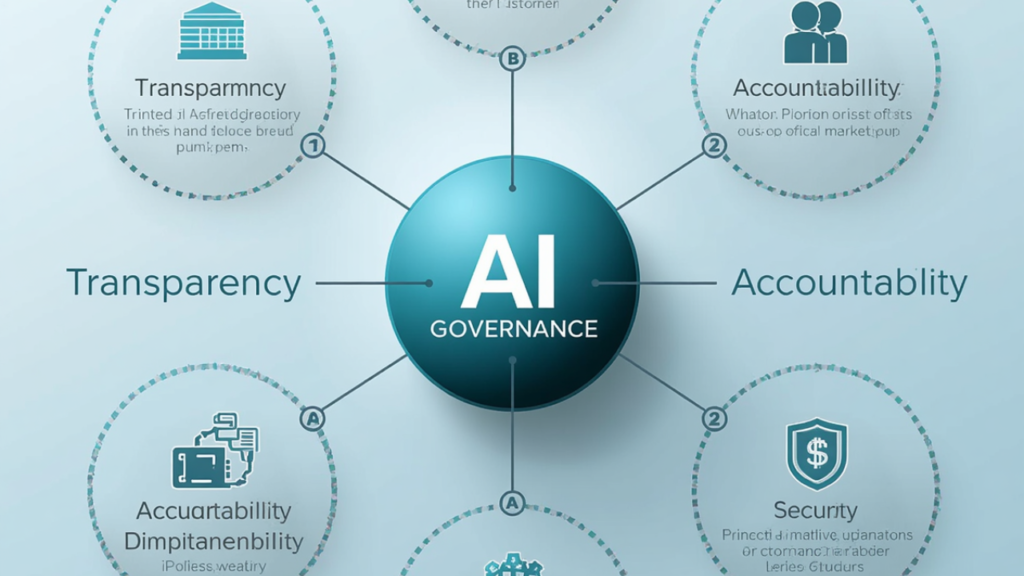
Core Principles
Several principles support effective governance programs.
Fairness
AI should treat people equally. Organizations should test systems for bias and discrimination.
Transparency
Additionally, users should understand how AI decisions are made. As a result, clear explanations increase confidence and strengthen trust in AI systems.
Accountability
Additionally, teams must know who is responsible for AI outcomes. As a result, oversight improves and decision-making becomes more effective.
Privacy
Importantly, personal information should remain protected. As a result, strong privacy controls reduce security concerns and help maintain user trust.
Safety
Moreover, AI systems should operate as expected. Therefore, continuous monitoring helps identify issues early and supports reliable performance.
READ MORE : Small Language Models for Edge AI and Smart Devices
Key Components
To be effective, a strong governance framework includes several important elements. Together, these components help ensure responsible and consistent AI management.
Policies
Firstly, policies define acceptable AI use. In addition, they provide guidance for employees and leadership. As a result, organizations can maintain consistent AI practices.
Risk Management
Additionally, organizations should identify and assess potential AI risks. Furthermore, regular risk reviews support better decisions and improve overall governance.
Data Management
High-quality data improves AI performance. Poor data often leads to inaccurate results.

Monitoring
Regular monitoring helps detect errors and performance issues.
Auditing
Audits evaluate whether AI systems follow company rules and regulations.
“Clear rules help technology serve people better.”
Benefits for Businesses
Implementing AI governance offers many advantages.
First, it helps reduce risks. Organizations can identify issues before they become serious problems.
Second, it improves customer confidence. For example, people are more likely to trust systems that follow clear rules. As a result, organizations can strengthen relationships with customers and stakeholders.
Third, governance supports regulatory compliance. Many countries are introducing AI-related regulations.
Additional benefits include:
- As a result, organizations achieve better decision quality.
- Additionally, they benefit from stronger data protection.
- Furthermore, operational control improves significantly.
- Consequently, stakeholder trust increases over time.
- Ultimately, businesses gain greater stability.
Therefore, governance supports both growth and responsibility.
READ MORE : AI for Risk Management: Future of Business Security
Common Risks
AI systems provide value, but they also introduce risks.
Bias
Biased data may create unfair outcomes. Regular testing helps reduce this issue.
Security Threats
Cybercriminals may target AI systems. Strong security measures are essential.
Lack of Transparency
Some AI models are difficult to explain. This can reduce user trust.
Privacy Concerns
Improper data use may expose sensitive information.
Regulatory Issues
Moreover, failure to follow regulations may result in penalties. Therefore, organizations should address these risks through structured governance practices.
READ MORE : AI Scoring Tools for Faster Sales and Better Business Results
Governance Roles
Successful governance requires participation across the organization.
| Role | Responsibility |
|---|---|
| Executive Team | Approves strategy and policies |
| Compliance Team | Reviews regulatory requirements |
| Data Team | Manages data quality |
| Security Team | Protects AI systems |
| Audit Team | Evaluates compliance efforts |
| Business Leaders | Oversee AI use cases |
Each group contributes to responsible AI management.

Building a Framework
Creating a governance framework requires planning and coordination.
Step 1: Define Objectives
Start by identifying business goals. Determine how AI supports organizational needs.
Step 2: Create Policies
Develop rules for development, deployment, and monitoring.
Step 3: Assess Risks
Evaluate possible legal, ethical, and operational risks.
Step 4: Assign Responsibilities
Define ownership for each AI initiative.
Step 5: Monitor Performance
Track outcomes and identify improvement opportunities.
Step 6: Review Regularly
Update policies as technology and regulations evolve.
By following these steps, organizations can build a stronger governance structure.
READ MORE : AI augmented tools for smarter work and daily growth
Compliance and Regulations
Governments around the world are creating AI regulations. These rules aim to improve transparency, fairness, and safety.
AI governance helps organizations prepare for changing legal requirements. It also supports documentation and reporting efforts.
Companies that act early often adapt more easily to new regulations.
“Trust grows when accountability becomes a priority.”
Ethical Considerations
Ethics plays a major role in AI management.
Organizations should ask important questions:
- Firstly, is the AI system fair?
- Next, does it respect privacy?
- Additionally, can its decisions be explained?
- Moreover, are risks properly managed?
- Finally, is there adequate human oversight?
These questions support responsible AI practices.
Ethical governance protects both businesses and users.
READ MORE : AI Tracking Explained: Everything You Need to Know
Best Practices
Organizations can improve governance through several practical actions.
Establish Clear Rules
Written policies create consistency across departments.
Improve Data Quality
Accurate data supports reliable AI results.
Train Employees
Staff should understand governance requirements and responsibilities.
Monitor Continuously
Regular reviews help identify problems quickly.
Document Decisions
Additionally, documentation supports transparency and accountability. As a result, organizations can track decisions more effectively and maintain clear oversight.
Encourage Collaboration
In addition, legal, technical, and business teams should work together. By doing so, organizations can improve coordination and decision-making.
As a result, these practices strengthen governance efforts over time and support responsible AI use.
Future Trends
The future of AI governance will continue to evolve.
Organizations are investing in better oversight tools. Automated monitoring solutions are becoming more common. In addition, governments are introducing new regulations.
Several trends may shape the future:
- In the future, more global AI standards are expected.
- Additionally, transparency requirements will likely increase.
- As a result, better risk assessment tools will emerge.
- At the same time, privacy protections may become stronger.
- Furthermore, regulatory oversight is expected to grow.
As AI adoption grows, governance will become even more important.
READ MORE : Decoding AI Scores: The Ultimate Guide for Publishers
Challenges
Although governance offers benefits, implementation can be difficult.
Some organizations struggle with limited resources. Others face challenges related to data quality or compliance complexity.
Common challenges include:
- As technology evolves rapidly, organizations must adapt continuously.
- Meanwhile, unclear regulations can create compliance challenges.
- In some cases, limited expertise may slow implementation efforts.
- Additionally, complex AI models can be difficult to understand.
- Furthermore, resource constraints may affect governance programs.
However, strong planning can help overcome these obstacles.
Conclusion
AI governance is essential for responsible AI adoption. It helps organizations manage risks, improve transparency, and build trust. In addition, strong governance frameworks support compliance, accountability, and ethical decision-making.
As AI continues to grow, businesses must create clear policies and oversight processes. Furthermore, regular monitoring helps ensure responsible AI use. As a result, organizations can reduce risks and improve confidence in AI systems. Ultimately, companies that invest in governance today will be better prepared for future challenges.
READ MORE : The Ultimate Beginner’s Guide to Blackbox AI: Features, Benefits, and Comparison

FAQs
1. What is AI governance?
Simply put, AI governance is a framework that manages and controls AI systems responsibly. As a result, organizations can ensure that AI is used safely, ethically, and effectively.
2. Why is AI governance important?
Importantly, it helps reduce risks, improve trust, and support compliance. As a result, organizations can use AI more responsibly and effectively.
3. Who is responsible for AI governance?
Responsibility is shared across leadership, compliance, security, and technical teams.
4. What are the main goals of AI governance?
Specifically, the goals include fairness, transparency, accountability, privacy, and safety. Together, these principles support responsible and trustworthy AI use.
5. How does AI governance reduce risk?
First, it identifies potential issues. Then, it establishes controls to address them. As a result, organizations can reduce risks and improve oversight.
6. Does AI governance improve compliance
Yes. In addition, it helps organizations meet legal and regulatory requirements. As a result, they can reduce compliance risks and maintain better governance practices.
7. What role does data quality play?
Furthermore, high-quality data improves AI accuracy and reliability. As a result, AI systems can deliver more accurate and dependable results.
8. Can small businesses implement AI governance?
Yes. In fact, even simple policies and monitoring practices can provide value. As a result, organizations can improve oversight and reduce potential risks.
9. What are common governance challenges?
For example, challenges include changing regulations, limited resources, and complex AI systems. As a result, organizations may face difficulties when implementing effective governance frameworks.
10. What is the future of AI governance?
In the future, governance will focus on stronger oversight, greater transparency, and improved compliance standards. As a result, organizations will be better equipped to manage AI responsibly.
READ MORE : The AI Environmental Footprint: What You Need to Know
Call to Action
Ready to strengthen your AI strategy? Start building an effective governance framework today. Firstly, create clear policies for AI use. Next, improve oversight across your organization. Additionally, ensure responsible AI practices at every stage. As a result, you can reduce risks and build greater trust in your AI systems.. A strong governance approach can help protect your business while building long-term trust.
Contact Us:
📧 http.areesha@gmail.com
For questions, collaborations, or professional assistance, feel free to contact us at the email above.









Post Comment
You must be logged in to post a comment.