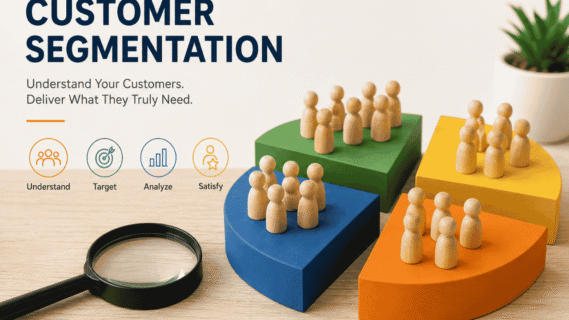
Customer Segmentation: Easy Guide for Better Business
Introduction
Customer segmentation is important for every business. Essentially, it divides customers into smaller groups based on shared characteristics. As a result, businesses can better understand and serve their target audience. This article covers customer segmentation in simple and easy-to-understand terms. Additionally, you will learn how it connects to the benefits of AI automation for businesses. Therefore, understanding customer segmentation can help improve both marketing and customer engagement.
Read more: AI Music Makers: Best Tools to Create Songs Fast Today
Furthermore, businesses use customer segmentation every day to make informed decisions. By grouping customers effectively, marketing becomes more targeted and efficient. In addition, companies can create personalized offers that meet specific customer needs. As a result, customer satisfaction and business performance often improve. Moreover, this guide serves as an excellent follow-up to “Benefits of AI Automation for Businesses?” by showing how AI can enhance segmentation strategies.
Read More: Computer Vision in AI: A Complete Beginner-Friendly Guide
What Is Customer Segmentation
Customer segmentation means dividing people into groups based on common traits. For example, companies may check age, location, or shopping habits. As a result, they can send better and more relevant messages. Therefore, customer segmentation helps teams save time and improve marketing efforts.
Additionally, it uses sales data and website activity to understand customer behavior. Then, simple tools help organize and analyze the information. Consequently, businesses can create more effective customer groups. As a result, happy customers often come from well-planned segmentation. Today, many companies practice customer segmentation to achieve better results.
Main Types of Customer Segmentation
Several ways exist for customer segmentation. Each way fits different needs. Choose one that matches your data.
- Demographic uses age and income.
- Geographic uses place and city.
These points show basic choices. You can combine them easily.
Read More: Why Data Science Is the Most In-Demand Skill in the AI Era?
Benefits of Customer Segmentation
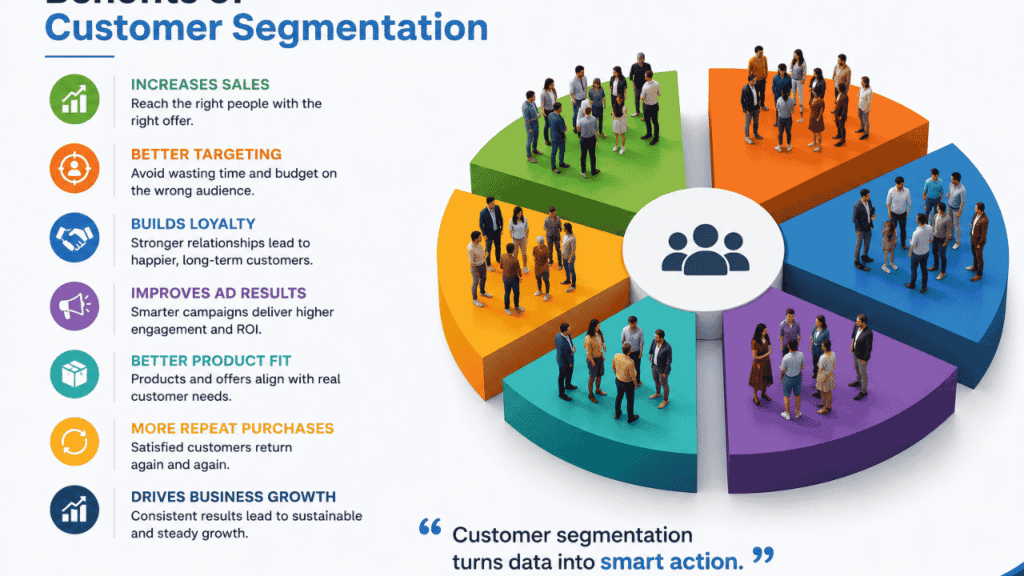
Customer segmentation brings many wins. For example, it can increase sales quickly. Additionally, teams avoid targeting the wrong audience. Furthermore, customer segmentation helps build customer loyalty.
Moreover, firms get better advertising results. As a result, products can better match customer wants and needs. Consequently, this leads to more repeat purchases. Therefore, customer segmentation supports steady business growth.
“Customer segmentation turns data into smart action.” – Marketing Expert.
How AI Automation Helps
AI automation improves customer segmentation greatly. In fact, it studies large amounts of data very quickly. First, collect information from all sources. Next, clean the data well before analysis.
Then, AI finds patterns automatically. It creates groups without manual work. This saves many hours. Finally, AI updates groups in real time.
Benefits of AI automation for businesses are clear here. For example, it cuts mistakes and increases speed. Additionally, companies can predict customer purchases more accurately. As a result, they can make better business decisions.
Read More: Everything You Need to Know About Google AI Studio Free AI Tools (2026 Edition)
“AI reveals hidden customer patterns.” – Data Analyst.
Step by Step Process
Set clear goals first. Next, collect customer data. Then, pick suitable tools. After that, study the data carefully. Subsequently, build the groups. Finally, test them often.
Customer segmentation needs regular checks. Therefore, track group results consistently. Additionally, make changes when needed.
Real Examples
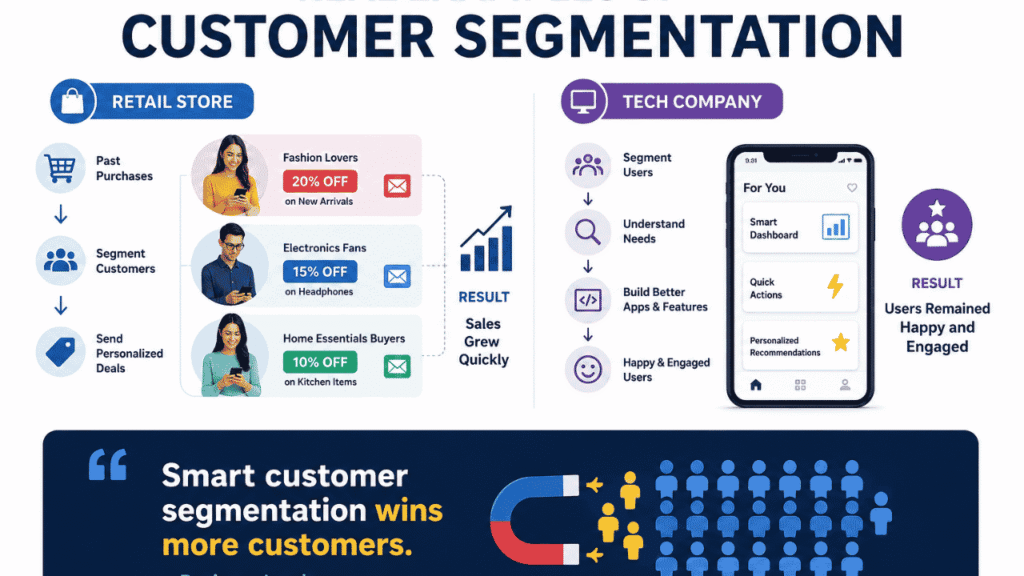
A shop used customer segmentation based on past purchases. As a result, they sent special deals to the right customers. Consequently, sales grew quickly.
Similarly, a tech company used customer segmentation to understand user needs. As a result, they built better apps and features. Therefore, users remained happy and engaged.
“Smart customer segmentation wins more customers.” – Business Leader.
Types and Uses
| Type | Uses | Benefit |
|---|---|---|
| Demographic | Age, income | Simple targeting |
| Geographic | Location | Local marketing |
| Behavioral | Buying habits | Better predictions |
| Psychographic | Lifestyle | Strong connection |
This table helps you compare fast.
Challenges in Customer Segmentation
Data privacy is a big issue. Additionally, customer groups can change quickly. Therefore, old data may cause errors. As a result, businesses should update data often.
Furthermore, small teams may need simple tools to get started. Therefore, it is best to start small and grow gradually. Even so, customer segmentation can deliver strong results with basic steps.
Role of AI in Challenges
AI manages large data easily. It follows privacy rules. Automation keeps groups fresh.
Benefits of AI automation for businesses include more free time. Teams plan better strategies. Customer segmentation becomes accurate and fast.
“AI automation is the future of marketing.” – Industry Pro.
AI vs Traditional
| Feature | Traditional | AI Automation |
|---|---|---|
| Speed | Slow | Very fast |
| Accuracy | Basic | High |
| Data size | Small | Very large |
| Updates | Manual | Real time |
This table shows why AI wins.
Tips to Start Today
Define your goals first. Gather clean data. Use free tools. Test small groups. Measure results.
Keep checking what works. Customer segmentation improves with time. Add AI for bigger success.
- Target high value groups first.
- Always follow privacy rules.
Measuring Success
Track sales per group. Check feedback scores. See loyalty growth. Use simple reports.
Good tracking proves the value. It supports benefits of AI automation for businesses.
Future Trends
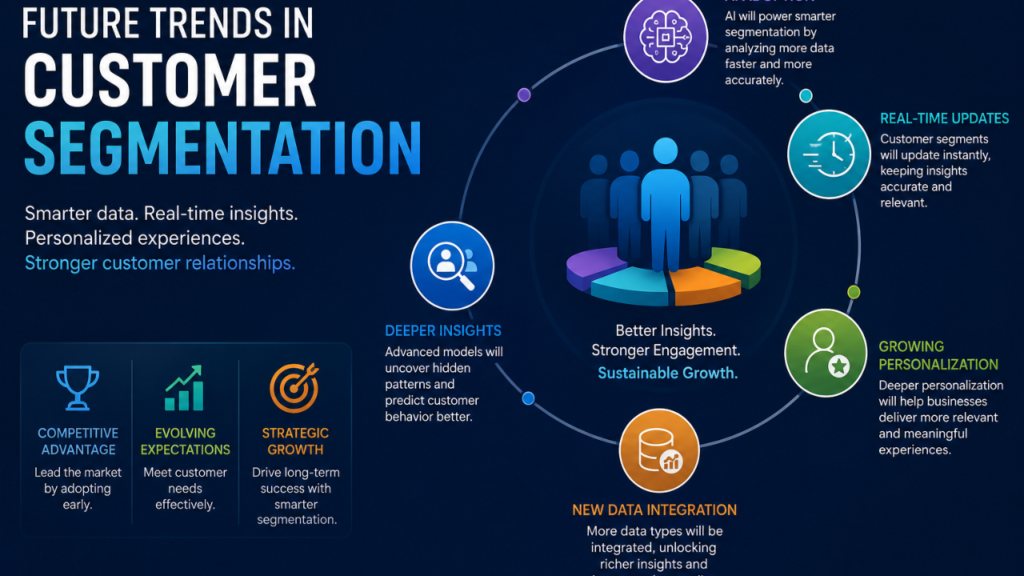
AI will become more common in customer segmentation strategies. As a result, businesses will be able to process and analyze customer data more efficiently. Furthermore, updates to customer segments will happen instantly, ensuring that information remains accurate and relevant. In addition, personalization will continue to grow, allowing companies to deliver more tailored experiences. Moreover, new data types will be integrated into segmentation models, providing deeper customer insights.
READ MORE: AI Governance Best Practices to Build Trust in AI Systems
Consequently, businesses that adopt these technologies early will gain a competitive advantage and lead the market. As customer expectations continue to evolve, effective customer segmentation will become even more valuable. Therefore, customer segmentation will remain a critical strategy for understanding customers, improving marketing efforts, and driving long-term business growth.
FAQs
Q: What is customer segmentation?
Customer segmentation is the process of grouping customers based on shared traits. As a result, businesses can better understand their target audience. This method makes marketing efforts more effective and personalized. Additionally, companies use it to create tailored offers for different customer groups. Ultimately, customer segmentation leads to higher customer satisfaction and stronger relationships.
Q: Why do businesses need customer segmentation?
Businesses need customer segmentation to increase sales and customer loyalty. Furthermore, it helps them avoid wasting resources on the wrong audience. By creating well-defined customer groups, companies can develop better products and services. As a result, many businesses experience faster growth after implementing segmentation. Therefore, customer segmentation supports smarter business decisions every day.
Q: How does AI help customer segmentation?
AI helps customer segmentation by identifying patterns and trends quickly. Moreover, it automates data collection and updates customer groups in real time. This saves teams significant amounts of time and effort. In addition, AI improves accuracy compared to traditional methods. Therefore, the benefits of AI automation for businesses are especially evident in customer segmentation.
Q: What are the main types?
The main types of customer segmentation are demographic, geographic, behavioral, and psychographic. For example, demographic segmentation focuses on factors such as age and income. Meanwhile, geographic segmentation is based on location. Behavioral segmentation analyzes purchasing habits and interactions. Finally, psychographic segmentation examines lifestyle, interests, and values. Together, these approaches provide valuable customer insights.
Q: Can small businesses use it?
Yes, small businesses can use customer segmentation effectively. In fact, they can start with basic sales and customer data. Additionally, many free and easy-to-use tools are available for beginners. As the business grows, segmentation strategies can become more advanced. Consequently, many small teams achieve positive results within a short time.
Q: What are the benefits of AI automation for businesses?
The benefits of AI automation for businesses include faster data processing and improved efficiency. Moreover, AI reduces errors when creating customer segments. As a result, teams have more time to focus on strategy and growth. In addition, AI improves predictions about customer needs and behavior. Therefore, businesses can make better decisions and achieve stronger outcomes.
Q: How often should segments be updated?
Customer segments should be updated every few months. However, they should also be reviewed whenever customer behavior changes significantly. Regular updates ensure that groups remain accurate and relevant. As a result, businesses can maintain effective marketing strategies over time. Ultimately, fresh data leads to better decision-making and improved performance.
Q: Is customer segmentation costly?
Customer segmentation is not expensive for most businesses. In many cases, companies can use data they already have. Additionally, several free or low-cost tools are available for beginners. Therefore, businesses can start small without making a large investment. Even so, they can still achieve meaningful results on a limited budget.
Q: What data is needed?
Customer segmentation typically requires sales records, location details, and purchasing behavior data. In addition, website activity can provide valuable insights. For beginners, it is best to start with existing data sources. Furthermore, clean and accurate data produces better outcomes. Over time, adding more data sources can improve segmentation accuracy even further.
Q: Where can I learn more?
You can learn more about customer segmentation by working with your own customer data. Additionally, reading beginner-friendly guides can help build foundational knowledge. It is also helpful to experiment with free tools and small customer groups. As you track and analyze results, your skills will continue to improve. Ultimately, customer segmentation becomes easier and more effective through practical experience.
READ MORE: Future of AI: Most Important AI Trends 2026
Call to Action
Need professional digital content and SEO services? Let’s grow your digital presence with data-driven SEO strategies and authoritative content.
Services Offered:
- Tech Article Writing
- On-Page SEO
- Keyword Research & Optimization
- Site Audit
Drop an email for long term collaborations 📧 zarirahc@gmail.com
Looking to share your own expertise? We are accepting guest pitches! Check out our Write for Us page for guidelines.
Author Bio
Zarirah Asif is a creative content writer who loves turning ideas into engaging words. She writes SEO-friendly articles that are easy to read and useful for readers. Her goal is to help brands stand out with quality content. She is always learning and improving her writing skills.









Post Comment
You must be logged in to post a comment.