Computer Vision in AI: A Complete Beginner-Friendly Guide
Introduction
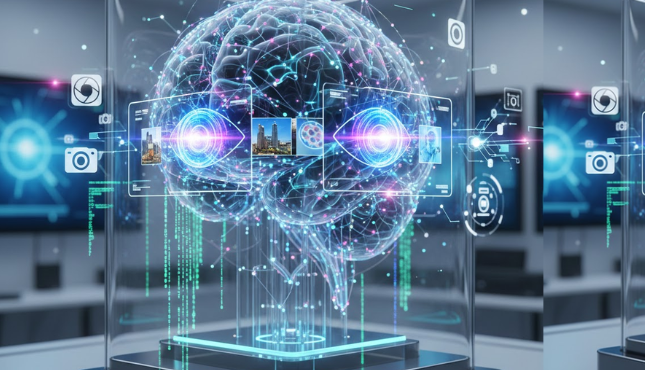
Computer Vision in AI is changing how machines understand the world. In fact, it helps systems read images and videos with speed.. It also helps brands solve real problems with better accuracy. Today, companies use it in health, retail, transport, and security. As a result, work becomes faster and smarter.
This field helps machines notice patterns. It can spot faces, objects, text, and movement. It may catch details people miss. Therefore, businesses now use it each day. It saves time, cuts errors, and improves decisions.
Read More: PyTorch Basics to Advanced: A Complete Learning Guide 2026
“A good vision system starts with a clear problem, not a flashy model.”
What It Means
Computer Vision in AI helps machines understand visual data. In fact, that data comes from photos, cameras, scans, or videos. Moreover, the system studies pixels and patterns. Then, it turns them into useful results.
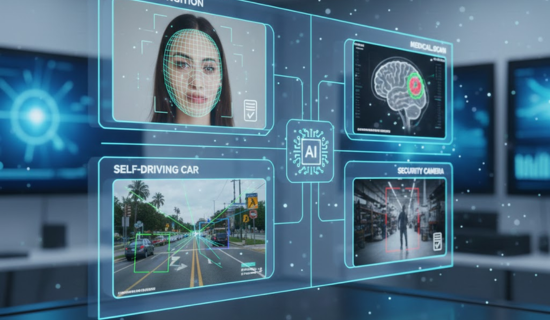
For example, a model can find a broken part on a machine. It can also check a medical image., In retail, it can count items on a shelf. Likewise, in traffic systems, it can read roads and signals. As a result, each use turns raw images into action.
Read More: Google Colab: The Ultimate Guide for Beginners (2026)
How It Works
Most vision systems follow a simple path. First, they collect image data. Next, they clean and label that data. After that, the model learns from examples. Then, it tests its predictions on new images.
In fact, the process often includes these steps:
- Data labeling for objects, faces, text, or defects
- Model training with large image sets
- Image collection from cameras, phones, drones, or scanners
- Testing for accuracy, speed, and fairness
- Deployment into apps, tools, or smart devices
This process looks simple. However, good results need strong planning. First of all, clean data matters a lot. In addition, balanced labels matter too. Without them, the system may fail in real settings
Read More: Coursera: Complete Guide to Online Courses and Degrees
Why It Matters For Business

Computer Vision in AI gives businesses faster answers from visual data. In fact, many firms collect images every day. However, much of that data sits unused. Therefore, vision tools turn those files into value.
Here is why companies invest in it:
- Computer Vision reduces manual inspection time
- It supports better quality control
- It helps teams monitor large operations
- Computer Vision creates better customer experiences
n factories, cameras can catch product faults early. Similarly, in stores, smart vision can study traffic flow, etc.
“Visual data grows every day, but value appears only after analysis.”
Core Applications
Computer Vision in AI now serves many tasks. In fact, some uses are simple, while others are advanced. Still, the goal stays the same. Ultimately, the machine must understand what it sees.
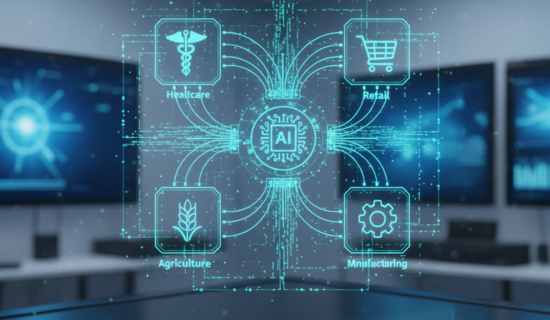
Healthcare
Doctors use vision tools to review X-rays and scans. In fact, these systems can highlight unusual areas. However, they do not replace experts.Instead, they support faster review.
Read More: Text-to-Speech:A simple and Complete AI Voice Guide for 2026
Retail
In fact, factories use cameras to spot scratches, cracks, or missing parts. As a result, this improves quality checks. As a result, teams improve layout, stock, and service.
Manufacturing
In fact, factories use cameras to spot scratches, cracks, or missing parts. As a result, this improves quality checks. It also lowers waste and product returns.
Security
Vision systems detect suspicious movement and, as a result, support alerts in real time.. Therefore, teams respond faster in busy areas.
Transport
Similarly, stores use cameras for shelf tracking and footfall analysis. For example, cameras help detect lanes, signs, and people. In fact, even driver support features use this approach.

Key Techniques Behind Vision Models
Computer Vision in AI depends on several methods. In fact, each method serves a goal. For example, some models classify images. Others detect many objects at once.
Read More: Discover the Best AI Models You Should Know in 2026
The most common techniques include:
| Technique | Main Use | Simple Example |
|---|---|---|
| Image classification | Assigns one label | Cat or dog image |
| Object detection | Finds many items | Cars on a road |
| Image segmentation | Marks pixel regions | Tumor area in a scan |
| OCR | Reads text from images | Invoice text extraction |
| Pose estimation | Tracks body points | Fitness movement analysis |
Deep learning has pushed these methods forward. Convolutional networks helped early growth. Now, transformer models also play a big role. Because of this shift, systems learn broader patterns.
“The best models do not just see more. They help teams act faster.”
Benefits That Make It Powerful
Computer Vision in AI brings speed and scale. A person can inspect only so much data. A trained system can inspect thousands of images fast. That matters in busy industries.
It also brings consistency. Human review can change from one shift to another. Machines follow the same rules every time. This improves trust in routine tasks.
Read More: Discover People Fast with Powerful Face Recognition Tool
Another benefit is cost control. Manual review takes time and staff. Vision tools lower repeated effort. Over time, that can improve margins. Smart planning is still needed at the start.
Main Challenges
This field has strong value, but it has limits. Bad lighting can harm accuracy. Low-quality images can confuse the model. Biased data can create unfair results.
Privacy is another issue. Cameras collect sensitive information. Therefore, brands must follow strong data rules. They should explain how they use visual data.
| Challenge | Why It Happens | Smart Fix |
|---|---|---|
| Poor image quality | Bad lighting or blur | Better cameras and preprocessing |
| Data bias | Narrow training sets | Diverse and balanced data |
| Slow inference | Large model size | Model compression or edge tuning |
| Privacy risk | Sensitive visual capture | Consent, masking, and policy controls |
| Drift over time | Real scenes change | Ongoing retraining and monitoring |
The Future Direction
Computer Vision in AI is moving toward faster systems. Smaller models now run on phones and edge devices. That means faster results with less delay. It also helps in remote areas.
Another major trend is multimodal AI. Systems now combine images, text, and voice. This gives a richer view. For example, a support tool may read a photo and answer a question.
Teams also want easier workflows. They need better collaboration and cleaner experiments. They also need reproducible results. Because of that, notebook-driven development remains important. It helps teams test ideas, compare runs, and share findings with less friction.
Read More: AI and Random Forest: The Ultimate Beginner-to-Pro Guide (2026)
Ultimately, the future belongs to vision tools that are fast, practical, and easy to trust.
Best Practices For Better Results
If you want strong outcomes, start with the business goal. Do not begin with tools alone. First, define what the system must detect. Then, decide how to measure success.
After that, focus on data quality. Good images improve model learning. Clear labels improve accuracy. Regular testing improves reliability. Also, human review should stay in the loop for critical cases.
Read More: Jupiter Notebook: A proven Tool That Makes Coding Effortless
Use these best practices:
- Start with one clear use case
- Gather diverse and realistic image data
- Track model accuracy in real settings
- Protect user privacy from day one
- Update the model as conditions change
These steps reduce waste and confusion. As a result, they help teams scale with confidence. Most importantly, they turn an idea into a useful business asset.
Final Thoughts
Computer Vision in AI is no longer a future concept. In fact, it is a practical business tool. Moreover, it helps machines read the visual world with purpose. As a result, from health to retail, the gains are clear.
Brands that use it well can improve speed, quality, and insight. Still, success needs good data and smart goals. When teams stay focused, vision systems create lasting value.
FAQs
1. What is computer vision?
Computer vision helps machines understand images and videos. In fact, it enables machines to analyze visual data and make informed decisions.
2. How is it used in AI?
In fact, it helps AI detect objects, text, faces, and actions.
3. Is it useful for small businesses?
Yes. In fact, small businesses use it for security and stock checks. Moreover, it helps them improve efficiency without large investments.
4. Does it replace human workers?
No. In fact, it supports people by handling repeated visual tasks.
5. What industries use it most?
For example, healthcare, retail, transport, and manufacturing use it widely.
6. Why does data quality matter?
However, poor images and weak labels reduce accuracy.
7. What is object detection?
In addition, it finds and labels many items in one image.
8. Is computer vision expensive?
Costs vary. However, many projects can start small.
9. What are the biggest risks?
However, privacy issues and biased data are common risks.
10. What is the future of this field?
Looking ahead, the future includes edge AI and multimodal systems. Furthermore, these technologies are expected to make vision systems faster, smarter, and more efficient.
Call To Action
Need content that ranks and converts? I can help with:
- Tech Article Writing
- On Page SEO
- Keyword Research & Optimization
- Site Audit
Let’s work on content that brings traffic and trust.
📧 zarirahc@gmail.com
Looking to share your own expertise? We are accepting guest pitches! Check out our Write for Us page for guidelines.
Author Bio
Zarirah Asif is a creative content writer who turns ideas into engaging words. In fact, she writes SEO-friendly articles that are easy to read and useful. Moreover, her goal is to help brands stand out with quality content. Ultimately, she is always learning and improving her writing skills.











Post Comment
You must be logged in to post a comment.