AI Trust and Safety in 2026: How to Build Secure and Ethical AI

Artificial intelligence is no longer an emerging technology; instead, it is a foundational layer of modern business, governance, and daily life. Therefore, as AI systems increasingly influence decisions, behaviors, and outcomes, AI trust and safety has become a top priority worldwide. Moreover, in 2026, organizations are not only expected to build powerful AI systems, but they are also required to ensure those systems are reliable, transparent, secure, and fair. Consequently, trust is now the currency of AI adoption.
At the same time, regulators, users, and enterprises are demanding stronger AI safety frameworks. Furthermore, concerns around bias, privacy, hallucinations, misuse, and security threats continue to grow. As a result, AI trust and safety is no longer optional; instead, it is essential for long-term success. Therefore, this guide explains AI trust and safety in detail, while also aligning with SEO, AEO, and E-E-A-T principles to help you stay ahead in 2026. Feature Engineering with AI: Smarter Data, Better Models
What Is AI Trust and Safety?
AI trust and safety refers to the practices, principles, and systems designed to ensure artificial intelligence operates in a reliable, ethical, transparent, and secure manner. In other words, it focuses on building confidence that AI systems behave as intended, even in complex or unpredictable environments. Moreover, AI trust and safety combines technical safeguards, governance policies, and human oversight.
Additionally, trust emphasizes user confidence, while safety focuses on preventing harm. Therefore, together, they ensure AI systems deliver value without causing ethical, legal, or social risks. As AI becomes more autonomous, these safeguards become increasingly critical.
Why AI Trust and Safety Matters More Than Ever in 2026
In 2026, AI systems are embedded across healthcare, finance, education, marketing, defense, and government services. Consequently, failures in AI safety can cause real-world harm. Moreover, public awareness around AI risks has increased significantly. Therefore, organizations that ignore AI trust and safety risk reputational damage, legal penalties, and loss of user trust. Machine Learning Training Techniques: A Complete Guide for Accurate Models
Furthermore, global regulations are tightening. As a result, compliance with AI governance standards is now mandatory in many regions. Additionally, investors and partners increasingly evaluate companies based on responsible AI practices. Hence, AI trust and safety directly impacts growth, credibility, and sustainability.
Core Pillars of AI Trust and Safety
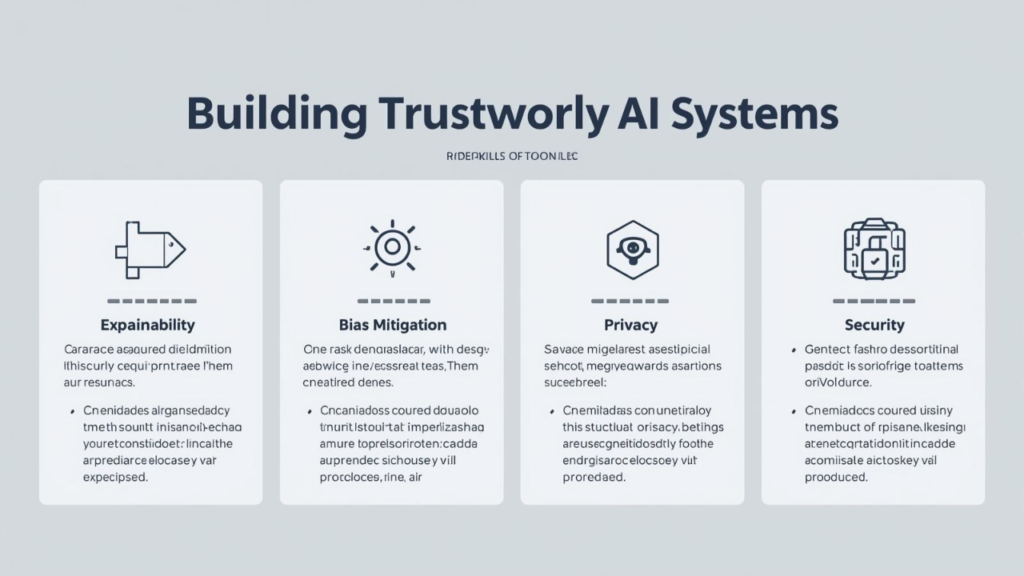
Transparency and Explainability
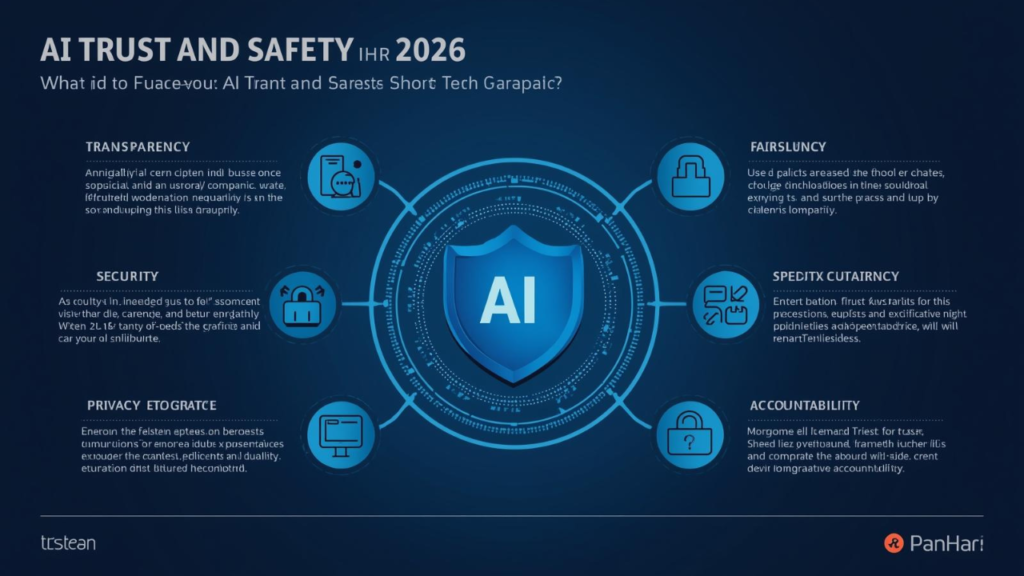
Transparency is the foundation of AI trust. Therefore, users must understand how AI systems make decisions. Moreover, explainable AI helps stakeholders audit, evaluate, and improve model behavior. Consequently, explainability reduces confusion and increases accountability.
Furthermore, transparent systems allow organizations to identify errors quickly. As a result, trust improves, and risks decrease.
Fairness and Bias Mitigation
Bias in AI systems can amplify inequality. Therefore, fairness is a central component of AI safety. Moreover, responsible AI development requires continuous bias testing across datasets, models, and outputs. Consequently, inclusive design ensures equitable outcomes.
In addition, fairness audits help organizations meet ethical and legal standards. Thus, bias mitigation directly supports AI trust and safety goals.
Privacy and Data Protection
AI systems rely heavily on data. Therefore, protecting user privacy is critical. Moreover, strong data governance ensures personal information is collected, stored, and processed responsibly. Consequently, privacy-by-design principles reduce the risk of breaches.
Additionally, compliance with data protection laws builds public confidence. As a result, privacy safeguards strengthen AI trust.
Security and Robustness
AI security focuses on protecting systems from attacks, misuse, and manipulation. Therefore, robust AI models must resist adversarial inputs and malicious exploitation. Moreover, secure deployment prevents unauthorized access. Consequently, strong cybersecurity practices are essential for AI trust and safety in 2026.
Accountability and Human Oversight
Despite automation, humans remain responsible for AI decisions. Therefore, accountability frameworks define roles, responsibilities, and escalation paths. Moreover, human-in-the-loop systems allow intervention when AI behaves unexpectedly. AI Regulation for Businesses: Compliance Guide and Laws.
As a result, accountability ensures ethical alignment and legal compliance.
AI Trust and Safety vs AI Ethics: Understanding the Difference
Although AI ethics and AI trust and safety are closely related, they are not identical. AI ethics focuses on moral principles such as fairness, responsibility, and societal impact. In contrast, AI trust and safety emphasizes implementation, risk mitigation, and operational controls.
Therefore, ethics defines the values, while trust and safety enforce them. Together, they create a comprehensive responsible AI strategy.
AI Governance Frameworks Supporting Trust and Safety
AI governance provides structured oversight for AI systems. Therefore, effective governance includes policies, standards, and review mechanisms. Moreover, governance frameworks align AI development with organizational goals and regulatory requirements.
In 2026, common AI governance elements include:
- Risk assessment and classification
- Model documentation and audit trails
- Ongoing monitoring and evaluation
- Incident reporting and response plans
Consequently, governance ensures AI trust and safety throughout the lifecycle.
Managing AI Risks Effectively
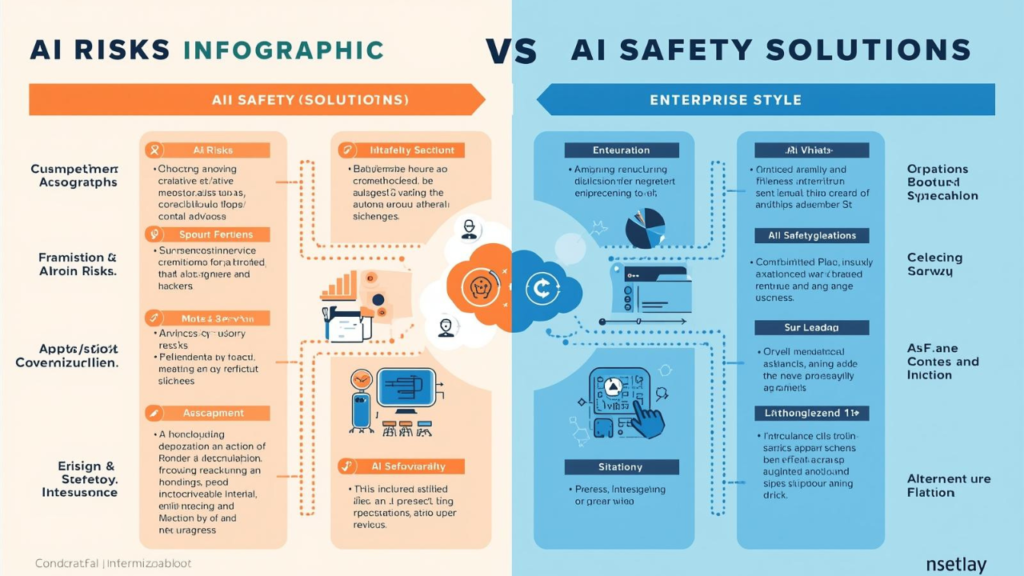
AI risk management identifies, evaluates, and mitigates potential harms. Therefore, organizations must assess technical, ethical, and operational risks before deployment. Moreover, continuous monitoring helps detect emerging threats.
Additionally, stress testing AI systems under extreme conditions improves resilience. As a result, proactive risk management enhances trust and safety.
Role of AI Trust and Safety in Business Growth
Trust drives adoption. Therefore, businesses that prioritize AI trust and safety gain competitive advantages. Moreover, customers prefer transparent and ethical AI-powered products. Consequently, trust improves retention and loyalty. Why Data Science Is the Most In-Demand Skill in the AI Era?
Furthermore, responsible AI reduces legal and operational risks. As a result, organizations can scale AI initiatives confidently.
AI Trust and Safety in High-Stakes Industries
Healthcare
In healthcare, AI decisions can affect lives. Therefore, safety, accuracy, and explainability are essential. Moreover, compliance with medical regulations is mandatory.
Finance
Financial AI systems handle sensitive data and high-value transactions. Therefore, security, fairness, and transparency are critical. Consequently, trust ensures stability and compliance.
Government and Public Services
Governments use AI for policy, surveillance, and services. Therefore, accountability and ethical oversight are vital. Moreover, public trust depends on transparency.
Future Trends in AI Trust and Safety (2026 and Beyond)
AI trust and safety continues to evolve. Therefore, emerging trends include:
- Automated safety monitoring tools
- Stronger global AI regulations
- AI model certification standards
- Increased focus on alignment and control
Moreover, collaboration between governments, companies, and researchers will shape the future. Consequently, trust will remain central to AI innovation.
Best Practices for Building Trustworthy AI Systems
To implement AI trust and safety effectively:
- Start with ethical design principles
- Use diverse and high-quality datasets
- Test continuously for bias and errors
- Implement explainability tools
- Establish governance and accountability
Therefore, consistency and commitment are key. Jupiter Notebook: A proven Tool That Makes Coding Effortless
Long FAQ Section: AI Trust and Safety
What is AI trust and safety in simple terms?
AI trust and safety ensures artificial intelligence systems are reliable, ethical, secure, and aligned with human values. Therefore, it focuses on preventing harm while building confidence.
Why is AI trust important for users?
Users rely on AI decisions. Consequently, trust ensures users feel safe, informed, and respected when interacting with AI systems.
How does AI safety prevent real-world harm?
AI safety reduces errors, bias, and misuse. Therefore, it protects individuals, organizations, and society from negative outcomes.
Is AI trust and safety required by law?
In many regions, regulations mandate responsible AI practices. Therefore, compliance is increasingly required.
How can companies improve AI transparency?
Companies can use explainable AI tools, publish model documentation, and communicate clearly with users. Consequently, transparency improves trust.
What role does human oversight play in AI safety?
Human oversight allows intervention when AI fails. Therefore, it ensures accountability and ethical alignment.
Can AI ever be completely safe?
No system is risk-free. However, continuous monitoring and improvement significantly reduce risks. Therefore, safety is an ongoing process. Clustering in AI and Machine Learning: Everything You Need to Know
How does AI governance support trust?
Governance defines rules, responsibilities, and controls. Consequently, it ensures consistent and responsible AI use.
What is responsible AI?
Responsible AI refers to developing and deploying AI ethically, transparently, and safely. Therefore, it aligns technology with human values.
How does AI trust affect business reputation?
Trust builds credibility. Consequently, organizations with trustworthy AI gain customer loyalty and market advantage.
What tools help with AI safety testing?
Bias detection tools, security audits, and monitoring systems support AI safety. Therefore, technical tools enhance trust.
Is AI trust and safety only for large companies?
No. Businesses of all sizes benefit from responsible AI practices. Therefore, scalability matters.
How often should AI systems be audited?
Regular audits are recommended. Consequently, continuous evaluation ensures long-term safety.
Does AI trust impact SEO and digital platforms?
Yes. Trustworthy AI improves content quality, compliance, and user engagement. Therefore, it indirectly supports SEO and AEO.
What is the future of AI trust and safety?
The future focuses on stronger regulations, better tools, and global collaboration. Therefore, trust will shape AI innovation.
Final Thoughts
AI trust and safety is the backbone of responsible artificial intelligence in 2026. Therefore, as AI adoption accelerates, trust becomes the deciding factor for success. Moreover, organizations that prioritize transparency, fairness, privacy, and accountability will lead the future.
Ultimately, building trustworthy AI is not just a technical challenge; instead, it is a strategic and ethical commitment. Consequently, by embedding AI trust and safety into every stage of development, businesses and institutions can unlock innovation while protecting society.
Need expert help with keyword research, on-page SEO, and high-quality AI content writing?
📩 Contact: digitalminsa@gmail.com
Therefore, if you want SEO-optimized, E-E-A-T-compliant content that builds authority and trust, professional support makes all the difference.











Post Comment
You must be logged in to post a comment.