AI Business Strategy 2026: How to Drive Growth & Efficiency
Introduction
Artificial intelligence is changing how businesses operate, compete, and grow. Today, having a strong AI Business Strategy is no longer optional. Instead, it has become a key requirement for organizations that want to remain competitive in a rapidly evolving market.
READ MORE: AI Governance Best Practices to Build Trust in AI Systems
In fact, businesses across industries are using AI to automate repetitive tasks, improve customer experiences, analyze large datasets, and make smarter decisions. As a result, companies can increase efficiency, reduce costs, and discover new growth opportunities.
However, simply investing in AI tools is not enough. To achieve meaningful results, organizations need a clear AI Business Strategy that aligns technology investments with business goals. By doing so, companies can maximize returns, reduce risks, and create sustainable competitive advantages.
Furthermore, as customer expectations continue to rise, businesses must adapt faster than ever before. Consequently, organizations that strategically embrace AI are better positioned to innovate, scale operations, and drive long-term success.
In this comprehensive guide, you’ll learn what AI Business Strategy is, why it is important, its key components, implementation steps, common challenges, future trends, and real-world applications across different industries.
Furthermore, you’ll discover how businesses can use AI strategically to improve efficiency, enhance customer experiences, drive innovation, and achieve sustainable long-term growth
What is an AI Business Strategy?
AI Business Strategy is a structured plan that helps organizations use artificial intelligence to achieve specific business objectives.
Rather than treating AI as a standalone technology project, businesses integrate AI into their overall strategy to improve performance and create measurable value.
AI Technologies vs Business Goals
| AI Technology | Business Benefit |
|---|---|
| Machine Learning | Better predictions and forecasting |
| Natural Language Processing | Improved customer service |
| Predictive Analytics | Data-driven decision-making |
| Computer Vision | Automated quality control |
| Generative AI | Content creation and innovation |
| Intelligent Automation | Increased operational efficiency |
Ultimately, a successful AI Business Strategy ensures that every AI investment supports business growth.
READ MORE: AI for Cybersecurity: Faster Detection and Better Defense
Why AI Business Strategy Matters
1. Competitive Advantage
Businesses generate large amounts of data every day. AI helps turn this data into useful insights that support smarter and faster decisions. As a result, companies can react more quickly to market changes and customer needs.
2. Better Decision-Making
AI can analyze large amounts of data in real time. Therefore, business leaders can spot trends, predict future outcomes, and make more informed decisions with greater confidence.
3. Increased Efficiency
AI helps automate repetitive tasks and reduces manual work. For example, it can assist with data entry, customer support, inventory management, financial reporting, and scheduling. As a result, employees can focus on more important tasks while businesses reduce operating costs.
4. Enhanced Customer Experience
Today, customers expect personalized experiences. In addition, AI helps businesses provide personalized recommendations, faster support, and more relevant interactions. As a result, customer satisfaction and loyalty often improve.
5. Sustainable Growth
A well-planned AI Business Strategy supports long-term growth and innovation. Furthermore, it helps businesses adapt to changing market conditions, improve efficiency, and discover new opportunities for success.

Key Components of a Successful AI Business Strategy
| Component | Purpose |
|---|---|
| Business Objectives | Align AI with company goals |
| Data Management | Ensure accurate and reliable data |
| Technology Infrastructure | Support AI implementation |
| Skilled Workforce | Maximize AI effectiveness |
| Responsible AI Practices | Build trust and compliance |
Poor Data Quality
Poor data quality is a major challenge for AI implementation. As a result, inaccurate, incomplete, or outdated data can lead to unreliable insights and poor business decisions.
READ MORE: The Most Important AI Ethics Case Studies You Should Know
Skills Gap
Many organizations struggle to find professionals with AI expertise. Consequently, this skills gap can slow implementation and reduce the effectiveness of AI initiatives.
Resistance to Change
In addition, employees may be hesitant to adopt new technologies. Therefore, effective communication, training, and leadership support are essential for successful AI adoption.
Ethical Concerns
Finally, ethical concerns remain an important challenge. Moreover, issues such as algorithmic bias, data privacy, and lack of transparency can reduce trust in AI systems.
Generative AI Growth
Generative AI continues to gain popularity across industries. Moreover, businesses are using it to create content, improve customer support, develop products, and drive innovation.
Autonomous Decision Systems
Additionally, AI systems are becoming more advanced and capable of making real-time decisions with less human involvement.
Hyper-Personalization
As a result, businesses can deliver more personalized experiences by analyzing customer behavior and preferences more effectively.
Explainable AI
At the same time, organizations are focusing on making AI decisions easier to understand and explain, which helps improve transparency and trust.
AI-Powered Business Intelligence
Finally, AI-powered analytics tools help businesses gain deeper insights and make faster, smarter decisions.
Competitive Advantage
Businesses generate large amounts of data every day. As a result, AI helps transform that data into valuable insights that support faster and smarter decision-making.
Better Decision-Making
AI can analyze large datasets in real time. Therefore, business leaders can identify trends, predict outcomes, and make more informed decisions.
READ MORE: AI Sales Jobs: A Complete Guide for Beginners
Increased Efficiency
AI automates repetitive tasks and reduces manual workloads. Consequently, employees can focus on higher-value activities while businesses improve productivity.
Enhanced Customer Experience
Today, customers expect personalized interactions. Moreover, AI helps businesses provide better recommendations, faster support, and more relevant experiences.
Sustainable Growth
A well-planned AI Business Strategy supports long-term growth and innovation. Furthermore, it helps businesses adapt to changing market conditions and new opportunities.
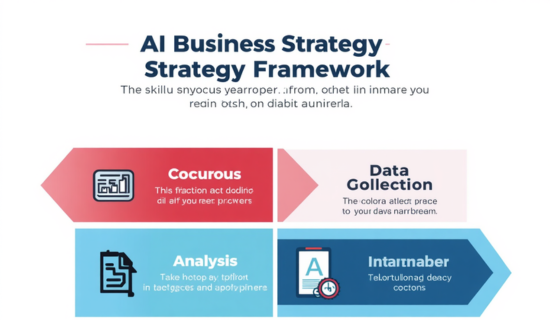
Step 1: Assess Readiness
Before implementing AI, organizations should evaluate their readiness. This includes reviewing data quality, technology systems, workforce skills, and leadership support.
Step 2: Identify High-Impact Opportunities
Next, businesses should focus on AI use cases with the highest potential return on investment. For example, customer service automation, fraud detection, demand forecasting, and marketing personalization often deliver strong results.AI talent development to maximize results.
Responsible AI
Transparency, fairness, accountability, and privacy should guide every AI initiative.
As a result, businesses can reduce risks while increasing stakeholder trust.
The Role of Leadership in AI Success
A successful AI Business Strategy requires strong leadership and a clear vision. While technology plays an important role, leadership teams are responsible for setting priorities, allocating resources, and driving organizational change.
Moreover, leaders must ensure that AI initiatives align with business goals and deliver measurable results. Effective communication is also essential because employees are more likely to embrace AI when they understand its benefits.
READ MORE:
In addition, leaders should encourage innovation and continuous learning across the organization. As a result, businesses can build a culture that supports AI adoption and maximizes the value of technology investments.
Measuring the ROI of AI Investments
Measuring the return on investment (ROI) of AI projects is critical for long-term success. Before implementation, organizations should establish clear performance indicators that align with business objectives.
For example, businesses may track revenue growth, cost reductions, customer satisfaction, or productivity improvements. Furthermore, regular performance reviews help identify areas where AI is delivering value and where adjustments may be needed. By monitoring these metrics consistently, organizations can make informed decisions about future investments.
So, measuring ROI helps businesses justify AI spending, optimize resources, and ensure that their AI Business Strategy continues to support growth and competitiveness.
How to Build an AI Business Strategy
Step 1: Assess Readiness
Before implementing AI, businesses should evaluate their current readiness. This includes reviewing data quality, technology systems, workforce skills, and leadership support.
So, by understanding these areas, organizations can identify gaps and prepare for successful AI adoption.
Step 2: Identify High-Impact Opportunities
Next, businesses should focus on AI use cases that offer the highest return on investment.
For example, customer service automation, fraud detection, demand forecasting, and marketing personalization can deliver significant business value. As a result, organizations can achieve quick wins and build momentum for future AI initiatives.
READ MORE: Data Sovereignty Guide: How to Stay Compliant and Secure
Step 3: Create an AI Roadmap
Your roadmap should include:
| Roadmap Element | Description |
|---|---|
| Goals | Desired outcomes |
| Timeline | Implementation schedule |
| Resources | Budget and talent |
| KPIs | Success metrics |
Step 4: Launch Pilot Projects
Start small and test AI solutions before large-scale deployment.
Step 5: Measure Performance
Track:
- Revenue growth
- Cost savings
- Productivity gains
- Customer satisfaction
- Process efficiency
Step 6: Scale Successful Initiatives
Once proven effective, expand AI adoption across the organization.
Industry Applications of AI Business Strategy
| Industry | AI Use Cases |
|---|---|
| Finance | Fraud detection, risk analysis |
| Healthcare | Diagnosis support, treatment planning |
| Retail | Personalization, inventory optimization |
| Manufacturing | Predictive maintenance, quality control |
| Marketing | Audience targeting, campaign optimization |
Common Challenges
Poor Data Quality
Poor data quality is one of the biggest obstacles to successful AI implementation. In many cases, inaccurate, incomplete, or outdated data can lead to unreliable insights and poor business decisions.
READ MORE: AI Data Analytics: Smart Insights for Better Business Growth
As a result, organizations must prioritize data management and governance to ensure their AI systems deliver accurate and meaningful outcomes.
Skills Gap
Another major challenge is the shortage of skilled AI professionals. Furthermore, many organizations struggle to find employees with the technical expertise needed to develop, manage, and optimize AI solutions.
Consequently, this skills gap can slow implementation and limit the overall effectiveness of AI initiatives.
Resistance to Change
In addition, employees may be hesitant to adopt new technologies due to uncertainty or fear of change. Therefore, organizations should focus on clear communication, ongoing training, and strong leadership support.
By doing so, businesses can encourage adoption and create a smoother transition to AI-powered processes.
Ethical Concerns
Finally, ethical concerns continue to be a significant consideration in AI adoption. Moreover, issues such as algorithmic bias, data privacy risks, and a lack of transparency can reduce trust among customers and stakeholders. As a result, organizations must establish responsible AI practices and governance frameworks to ensure fairness, accountability, and compliance.
Future Trends in AI Business Strategy
Generative AI Growth
Generative AI is rapidly transforming the way businesses operate. Moreover, organizations are using it to create content, improve customer support, develop new products, and drive innovation.
As a result, companies can increase efficiency while delivering more value to customers.
READ MORE: Small Language Models for Edge AI and Smart Devices
Autonomous Decision Systems
Additionally, AI systems are becoming more advanced and capable of making real-time decisions with minimal human involvement.
Consequently, businesses can respond faster to changing conditions and improve operational efficiency across various departments.
Hyper-Personalization
Explainable AI
Customer expectations continue to evolve. Therefore, businesses are increasingly using AI to understand customer behavior, preferences, and buying patterns.
As a result, they can deliver highly personalized experiences that improve engagement, satisfaction, and loyalty.
At the same time, organizations are placing greater emphasis on transparency and accountability in AI systems. In other words, businesses want AI-generated decisions to be easier to understand and explain. This helps build trust among customers, employees, and stakeholders.
AI-Powered Business Intelligence
Finally, AI-powered business intelligence tools are enabling organizations to analyze data more effectively. Furthermore, these advanced analytics platforms provide deeper insights and support faster, smarter decision-making.
As a result, businesses can identify opportunities, reduce risks, and gain a competitive advantage.
Frequently Asked Questions (FAQs)
What is an AI Business Strategy?
AI Business Strategy is a plan that helps organizations use artificial intelligence to achieve business goals, improve performance, and support long-term growth.
READ MORE: AI Data Ethics and Responsible AI: Everything You Need to Know
Why is AI important for businesses?
AI helps businesses improve efficiency, make better decisions, reduce costs, and deliver better customer experiences.
Can small businesses use AI?
Yes, small businesses can benefit from AI. In fact, many affordable and cloud-based AI tools are available for businesses of all sizes.
How long does AI implementation take?
The timeline varies by organization. However, many businesses begin seeing measurable results within 6 to 12 months.
What is the biggest challenge in AI adoption?
One of the biggest challenges is poor data quality. Additionally, many organizations face a shortage of skilled AI professionals.
How do businesses measure AI success?
Businesses typically measure AI success through revenue growth, cost savings, productivity improvements, and customer satisfaction.
Which industries benefit most from AI?
Many industries benefit from AI. For example, finance, healthcare, retail, manufacturing, and marketing use AI to improve operations and decision-making.
Is AI expensive to implement?
Costs can vary depending on the solution. However, cloud-based AI platforms have made AI adoption more affordable and accessible for many businesses.
Conclusion
AI is no longer a future trend—it is a present-day business necessity. Organizations that develop a strong AI Business Strategy can improve efficiency, make better decisions, enhance customer experiences, and create sustainable growth.
However, success requires more than simply adopting AI tools. Businesses need clear objectives, quality data, the right technology infrastructure, skilled teams, and responsible governance practices.
Looking ahead, AI will continue to reshape industries and redefine competitive advantage. Therefore, organizations that invest in a strategic AI roadmap today will be better prepared for tomorrow’s opportunities.
READ MORE: AI Business Ideas to Start Online and Scale Quickly
Whether you run a startup, small business, or global enterprise, now is the perfect time to build an AI Business Strategy that delivers long-term value and lasting success.










Post Comment
You must be logged in to post a comment.