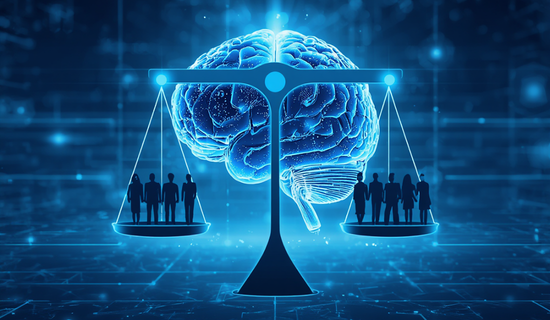
AI Bias and Fairness: Everything You Need to Know
Introduction
AI bias and fairness are becoming more important every day. Today, AI helps people at work, at school, in hospitals, and in banks. However, AI is not always fair. Sometimes it makes unfair choices. As a result, people may lose good chances. Therefore, businesses should build fair AI from the start.
Moreover, fair AI builds trust. It also improves customer experience. In addition, it protects people from unfair treatment. Therefore, every company should care about AI bias and fairness.
“Fair AI creates trust. Trust creates success.”
What Is AI Bias?
AI bias happens when AI gives unfair results. Usually, this starts with bad data. If the data is unfair, the AI learns unfair patterns. As a result, it repeats those mistakes.
For example, an AI hiring tool may reject good workers. Likewise, a loan system may reject qualified people. Therefore, businesses should always check their data.
Simply put, AI learns from people. So, if people make mistakes, AI may copy them.
READ MORE : AI Website Builder: Save Time With These Powerful AI Tools
What Is AI Fairness?
AI fairness means treating everyone equally. It means AI should not favor one person or one group. Instead, it should give everyone the same chance.
Moreover, fair AI makes better decisions. It also improves customer trust. Therefore, businesses should always test AI before using it.
Fair AI should:
- Treat everyone equally.
- Use balanced data.
- Give honest results.
- Avoid unfair choices.
- Respect every user.
“Technology should help everyone equally.”
Why AI Bias and Fairness Matter
Today, AI makes many important decisions. Therefore, fairness matters more than ever.
AI helps doctors. It also helps teachers. Moreover, banks use AI every day. Likewise, online stores use AI to recommend products.
If AI becomes unfair, many problems appear.
For example:
- As a result, good workers may lose jobs.
- In addition, students may lose opportunities.
- Moreover, customers may lose trust.
- Consequently, businesses may lose money.
- Finally, companies may face legal problems.
Therefore, AI bias and fairness should always be a top priority.
READ MORE : How AI Augmented Technology Is Transforming Businesses and Daily Life
Common Causes of AI Bias
Many things create AI bias. However, most problems begin with data.
| Cause | Simple Meaning |
|---|---|
| Poor data | Data contains unfair examples. |
| Missing data | Some people are left out. |
| Human bias | Developers make unfair choices. |
| Old records | AI learns outdated ideas. |
| Weak testing | Problems stay hidden. |
Therefore, businesses should review data often.
Moreover, they should update AI regularly.
Types of AI Bias
There are many kinds of AI bias.
Data Bias
This happens when training data is not balanced.
Selection Bias
This happens when some groups are missing.
Historical Bias
Old unfair decisions remain inside the data.
Human Bias
Developers may unknowingly add bias.
Algorithm Bias
Sometimes the AI model itself creates unfair results.
Therefore, testing should happen before every launch.
Real Examples of AI Bias
Many industries have faced AI bias.
Hiring
Some hiring tools preferred men over women. Therefore, many companies changed their systems.
Banking
Some loan systems treated customers unfairly. As a result, many banks improved their AI.
Healthcare
Some medical AI worked better for one group than another. Therefore, researchers collected better data.
Education
Some admission tools favored certain students. Consequently, schools reviewed their AI systems.
These examples show why AI bias and fairness matter.
READ MORE : AI Platform Training Made Simple: Everything You Need to Know
“Good data creates better decisions.”

Benefits of AI Fairness
Fair AI helps everyone.
| Benefit | Result |
|---|---|
| Better trust | Customers feel safe. |
| Better accuracy | AI gives stronger results. |
| Happy users | More people stay loyal. |
| Lower risk | Businesses avoid problems. |
| Better reputation | Companies grow faster. |
Moreover, fair AI creates long-term success.
In addition, customers feel respected.
Therefore, businesses become stronger.
How to Reduce AI Bias
Fortunately, businesses can reduce AI bias.
First, collect balanced data.
Next, remove wrong information.
Then, test AI with different users.
After that, review every result.
Finally, improve the model often.
Likewise, companies should train employees.
Moreover, they should welcome feedback.
As a result, AI becomes more reliable.
READ MORE : AI Acronym Generator: The Easy Way to Create Smart Acronyms
Best Practices for Fair AI
Follow these simple tips.
- Use balanced data.
- Test AI often.
- Remove errors.
- Explain AI decisions.
- Protect privacy.
- Monitor performance.
- Update AI models.
- Listen to users.
- Improve transparency.
- Review results regularly.
Therefore, AI becomes fairer over time.
Challenges of AI Fairness
Although fairness is important, it is not always easy.
First, good data is hard to collect.
Second, fairness means different things to different people.
Third, AI keeps changing.
Moreover, new laws appear every year.
Therefore, businesses should continue learning.
READ MORE : AI Digital Ethics and Responsible AI: Everything You Need to Know

AI Ethics and Fairness
Ethics and fairness work together.
Ethical AI respects people.
It also protects privacy.
Moreover, ethical AI avoids discrimination.
Therefore, companies should follow ethical rules from the beginning.
“Ethics is the heart of trusted AI.”
Industries That Need Fair AI
Many industries need fair AI.
- Healthcare
- Banking
- Education
- Retail
- Human resources
- Government
- Insurance
- Transportation
- Manufacturing
- Customer service
Therefore, every industry should improve AI bias and fairness.
READ MORE : Which AI Logo Creator Free Tool Produces the Best Results?
Future of AI Bias and Fairness
The future looks promising.
Today, more companies invest in fair AI.
Likewise, governments create better rules.
Moreover, customers expect honest technology.
Therefore, businesses should prepare now.
As a result, trusted companies will grow faster.
Tips for Businesses
Businesses should start with small steps.
First, improve data quality.
Next, test AI regularly.
Then, train employees.
Moreover, explain AI decisions clearly.
Finally, review every update.
Consequently, businesses build customer trust.
Conclusion
AI bias and fairness are important for every business. Fair AI creates trust. Moreover, it improves decisions. In addition, it protects users. Therefore, every company should build fair AI from the beginning. Although AI is growing fast, fairness should always come first. As a result, businesses can serve everyone better while building lasting trust.

Read more : aiblitzo
Frequently Asked Questions
1. What is AI bias?
AI bias happens when AI makes unfair decisions.
2. What is AI fairness?
AI fairness means treating everyone equally.
3. Why does AI become biased?
Usually, bad or incomplete data causes bias.
4. Can AI bias be removed?
No. However, it can be reduced.
5. Why is fairness important?
Fairness builds trust and improves decisions.
6. Which industries use AI?
Healthcare, banking, education, retail, and many more.
7. How can businesses reduce AI bias?
They should use better data and test AI often.
8. What is balanced data?
Balanced data includes many different groups.
9. Does fair AI improve customer trust?
Yes. Customers trust fair systems more.
10. Why should AI be tested?
Testing finds problems early.
11. What is ethical AI?
Ethical AI respects people and avoids unfair treatment.
12. Can small businesses build fair AI?
Yes. Every business can improve fairness.
13. Does AI fairness improve business growth?
Yes. It helps build customer confidence.
14. What is transparent AI?
Transparent AI explains how it makes decisions.
15. What is the future of AI fairness?
The future focuses on safer and fairer AI systems.
Call to Action
Are you ready to improve your business?
Learn sales skills, AI tools, and CRM systems.
For training, writing services, or business support, contact:
Email: sheharbanogulfam60@gmail.com
Author Bio
Shehar Bano is an SEO content writer who creates clear, engaging, and search-friendly content. She specializes in AI, digital marketing, business, technology, and SEO. Moreover, she enjoys turning complex topics into simple and easy-to-understand articles. In addition, she focuses on creating content that provides real value to readers. As a result, her articles are informative, engaging, and optimized for search engines. Above all, she is dedicated to helping businesses grow with high-quality content that builds trust and improves online visibility.








Post Comment
You must be logged in to post a comment.