Computer Vision in AI: A Complete Beginner-Friendly Guide
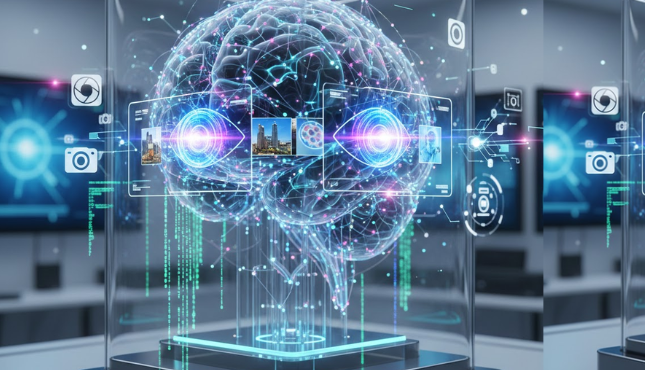
Computer Vision in AI is one of the most powerful technologies today. It helps machines see and understand the world. Just like humans use their eyes and brain, computers use cameras and algorithms. As a result, machines can analyze images and videos.
In recent years, computer vision in AI has grown very fast. Moreover, it is now used in daily life. From smartphones to hospitals, this technology is everywhere. Therefore, learning computer vision is important for beginners and professionals alike.
In this guide, you will learn everything in simple words. So, let’s start step by step.
What Is Computer Vision in AI?
Computer vision in AI means teaching computers to understand visual data. This data can be images or videos. First, the system collects images. Then, it processes them. Finally, it makes decisions.
For example, when your phone unlocks using your face, computer vision is working. Similarly, when a car detects a road sign, it uses computer vision in AI.
In short, this technology allows machines to see, think, and act.
Why Computer Vision in AI Is Important Today
Computer vision is important because visual data is everywhere. Every day, billions of images are shared online. Therefore, AI needs vision to understand this data.
Moreover, businesses use computer vision to save time and money. Also, it improves accuracy. As a result, human effort is reduced.
Most importantly, computer vision helps in safety, health, and automation. Hence, its demand is increasing every year.
How Computer Vision in AI Works
Computer vision works in a few simple steps. Let’s understand them clearly.
Step 1: Image Capture
First, a camera or sensor captures an image or video.
Step 2: Image Processing
Next, the image is cleaned. Noise is removed. Size is adjusted.
Step 3: Feature Detection
Then, the system finds patterns. These can be edges, colors, or shapes.
Step 4: Understanding
After that, AI models analyze the features. They identify objects.
Step 5: Decision Making
Finally, the system takes action. For example, it may label an object.
Thus, computer vision in AI turns images into useful data.

Computer Vision in AI for Beginners: Easy Explanation
If you are new, don’t worry. Computer vision for beginners is not difficult.
You don’t need deep math at the start. Instead, focus on concepts. Learn how images are represented as pixels. Then, understand how AI learns from data.
Start with simple tools like:
- Python
- OpenCV
- Basic neural networks
After that, move to deep learning. Step by step, learning becomes easy.
Computer Vision Algorithms Explained Simply
Computer vision algorithms are rules that help machines understand images. Some are traditional. Others are AI-based.
Traditional Algorithms
These methods use fixed rules.
- Edge detection
- Image filtering
- Color detection
However, they are limited. They fail with complex images.
AI-Based Algorithms
These use learning instead of rules.
- Convolutional Neural Networks (CNNs)
- Deep learning models
They learn from thousands of images. Therefore, they are more accurate.
Today, most computer vision algorithms use deep learning.

Computer Vision in AI Examples in Real Life
Computer vision examples are easy to find. You use them every day.
Face Recognition
Phones use face detection to unlock screens.
Self-Driving Cars
Cars detect roads, people, and signs.
Medical Imaging
Doctors analyze X-rays and MRIs using AI.
Security Systems
Cameras detect unusual activities.
Social Media
Apps auto-tag people in photos.
These computer vision examples show how powerful this technology is.

Computer Vision in AI Applications Across Industries
Computer vision applications are growing fast. Almost every industry uses them.
Healthcare
Doctors detect diseases early. AI scans medical images.
Retail
Stores track customer behavior. They improve layout.
Agriculture
Farmers detect crop diseases using images.
Manufacturing
Factories find defects in products.
Education
AI checks attendance using face recognition.
Clearly, computer vision applications improve efficiency and accuracy.

Computer Vision vs Machine Learning: Key Differences
Many beginners confuse computer vision vs machine learning. Let’s clear it up.
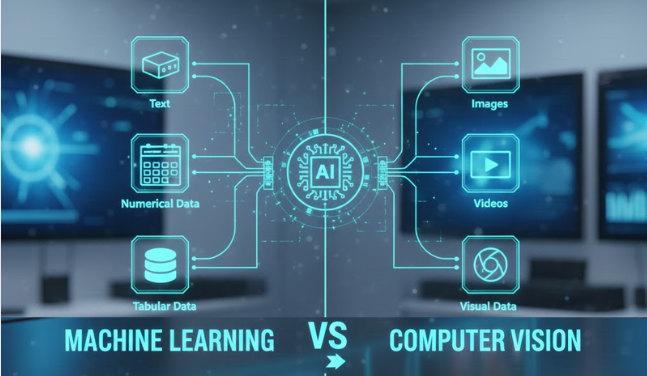
Machine learning is a broad field. It helps machines learn from data. Computer vision is a part of it. It focuses only on visual data.
In simple words:
- Machine Learning → Learns from all data
- Computer Vision → Learns from images and videos
So, computer vision uses machine learning techniques. But not all machine learning is computer vision.
Role of Deep Learning in Computer Vision in AI
Deep learning plays a major role today. Without it, modern computer vision is not possible.
Neural networks learn features automatically. They don’t need manual rules. Therefore, accuracy improves.
CNNs are the most popular models. They work well with images. As a result, they are widely used in computer vision in AI.
Benefits of Computer Vision in AI
Computer vision offers many benefits.
First, it saves time.
Second, it reduces errors.
Third, it works 24/7.
Moreover, it handles large data easily.
Also, it improves safety and automation. Hence, businesses trust it.
Challenges in Computer Vision
Despite benefits, challenges exist.
- Data needs to be large
- Training takes time
- Models need high computing power
However, tools are improving. Therefore, these challenges are reducing.
Future of Computer Vision in AI
The future looks very bright. Computer vision in AI will become smarter.
Soon, AI will understand emotions better. Also, real-time vision will improve. Moreover, costs will decrease.
In the coming years, more jobs will require computer vision skills. Hence, learning now is a smart move.
How to Start Learning Computer Vision in AI Today
Here is a simple roadmap.
- Learn Python
- Understand basic image concepts
- Use OpenCV
- Learn machine learning basics
- Study CNNs
- Practice with real projects
With consistency, anyone can learn computer vision for beginners.
Final Thoughts
Computer vision in AI is transforming the world. It helps machines see and understand images. From healthcare to security, its impact is huge.
Moreover, learning computer vision opens many career doors. With simple tools and practice, beginners can start today.
Therefore, don’t wait. Start learning now and be part of the future.
Frequently Asked Questions (FAQs)
What is cSo, what is computer vision in AI?
Computer vision in AI is a technology that helps machines see and understand images. First, a system captures an image. Then, it analyzes visual data. As a result, the computer can recognize objects, faces, and patterns.
First of all, is computer vision in AI difficult for beginners?
No, computer vision for beginners is not difficult if you learn step by step. At first, you study basic image concepts. Then, you practice with simple tools. Over time, learning becomes much easier.
Now, what are the most common computer vision in AI applications?
Computer vision applications are used in many industries today. For example, healthcare uses it for medical scans. Similarly, security systems use it for monitoring. Therefore, its usage is increasing rapidly.
Next, what are some real-life computer vision examples?
There are many computer vision examples in daily life. For instance, face unlock on phones is very common. In addition, self-driving cars detect roads and signs. Thus, computer vision in AI is already part of our routine.
However, what is the difference between computer vision vs machine learning?
Computer vision vs machine learning can be confusing at first. Machine learning is a broad field. On the other hand, computer vision focuses only on images and videos. In simple terms, computer vision is a subset of machine learning.
Then, which computer vision algorithms are most widely used?
Most modern systems use advanced computer vision algorithms. For example, Convolutional Neural Networks are very popular. Moreover, they offer high accuracy. Therefore, they are widely used in AI-based vision systems.
Also, do I need programming skills for computer vision?
Yes, basic programming knowledge is helpful. Usually, Python is the best choice. However, beginners can start with simple examples. As a result, coding becomes easier with practice.
Furthermore, what is the future of computer vision in AI?
The future of computer vision in AI looks very promising. Over time, systems will become faster and smarter. In addition, more industries will adopt this technology. Therefore, demand will continue to grow.
Meanwhile, can computer vision work without AI?
Yes, it can work without AI, but only to a limited extent. Traditional methods follow fixed rules. However, AI-based computer vision is more powerful. Hence, modern systems prefer AI models.
Finally, how long does it take to learn computer vision?
Learning time depends on effort and practice. Generally, beginners can learn basics in a few months. With consistency, real projects can be built within six months.
Call to Action (CTA)
Elevate Your Website’s Growth with Professional SEO & Content Solutions
Are you struggling to improve your Google rankings or target the right audience? Moreover, do you want content that not only reads well but also delivers measurable outcomes? With hands-on experience in strategic keyword research, SEO-focused content creation, and effective on-page SEO, I help websites strengthen their online presence, increase traffic, and improve conversions.
Here’s how I can support your growth:
- Keyword Research: Identify profitable, low-competition keywords that align perfectly with your niche
- Content Writing: Develop compelling, SEO-optimized content that engages and converts readers
- On-Page SEO: Enhance titles, meta descriptions, headings, images, and internal links to improve search visibility
Whether you’re a blogger, business owner, or digital marketer, I offer result-driven SEO strategies tailored to your specific goals.
💡 Get Started Today!
Email me at zarirahc@gmail.com, and let’s explore how we can improve your website’s traffic, engagement, and overall performance.













Post Comment
You must be logged in to post a comment.