Understanding AI Regulation for Businesses: A Practical Compliance Guide

Introduction: Why AI Regulation for Businesses Matters More Than Ever
Artificial intelligence is rapidly transforming how companies operate; however, as AI adoption accelerates, AI regulation for businesses has become a critical priority. Today, governments, regulators, and global organizations are actively introducing AI laws to ensure ethical use, transparency, and accountability. Therefore, businesses that rely on AI technologies must understand evolving regulations to remain compliant, competitive, and trustworthy. Clustering in AI and Machine Learning: Everything You Need to Know
Moreover, AI regulation is no longer optional. Instead, it directly affects data protection, intellectual property, consumer rights, cybersecurity, and corporate governance. Consequently, organizations that fail to adapt risk legal penalties, reputational damage, and operational disruptions. For this reason, understanding AI compliance frameworks is essential for every modern business.
What Is AI Regulation for Businesses?
AI regulation for businesses refers to laws, policies, and governance frameworks that control how companies design, deploy, and manage artificial intelligence systems. Specifically, these regulations aim to:
- Ensure ethical AI use
- Prevent bias and discrimination
- Protect personal data
- Increase transparency and accountability
- Reduce safety and security risks
In other words, AI regulation creates a legal and ethical boundary within which businesses must operate.
Why Governments Are Regulating AI Now
AI systems influence financial decisions, healthcare outcomes, hiring processes, and consumer behavior. As a result, governments are acting quickly. Furthermore, unchecked AI deployment can cause serious harm, including privacy violations, biased decisions, and misinformation.
Therefore, regulators are focusing on risk-based AI governance. Instead of banning AI entirely, laws aim to classify AI systems by risk level and apply appropriate controls accordingly.
Global AI Regulations Businesses Must Know
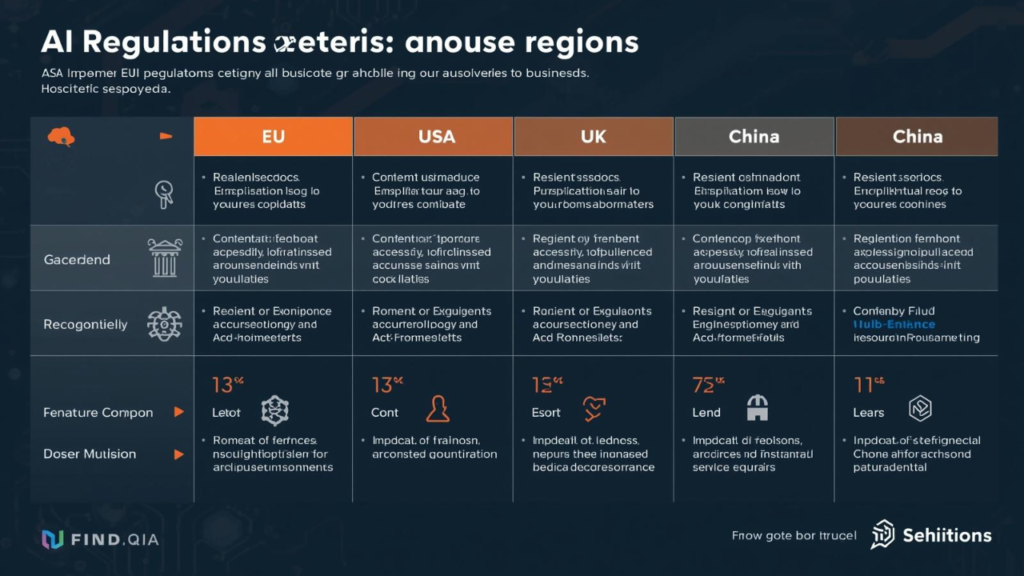
1. European Union AI Act
The EU AI Act is the world’s first comprehensive AI law. It categorizes AI systems into four risk levels:
- Unacceptable Risk – Banned AI systems
- High Risk – Strict compliance requirements
- Limited Risk – Transparency obligations
- Minimal Risk – No major restrictions
As a result, businesses operating in or targeting the EU must meet rigorous compliance standards, especially for high-risk AI systems. Machine Learning Training Techniques: A Complete Guide for Accurate Models
2. United States AI Regulation Approach
Unlike the EU, the U.S. follows a sector-specific approach. While there is no single AI law, businesses must comply with:
- FTC guidelines
- Data privacy laws
- AI accountability frameworks
- Executive Orders on AI safety
Therefore, compliance depends on industry, use case, and jurisdiction.
3. United Kingdom AI Governance Model
The UK focuses on principle-based AI regulation, emphasizing:
- Safety
- Transparency
- Fairness
- Accountability
Instead of rigid laws, regulators guide businesses through sector regulators such as the ICO and FCA.
4. China’s AI Regulations
China enforces strict AI governance, especially for:
- Generative AI
- Algorithmic recommendations
- Data localization
Consequently, businesses operating in China must undergo algorithm registration and content compliance checks. AI Content Writing Tutorial: The Ultimate SEO Guide for 2026
How AI Regulation Impacts Businesses
AI regulation affects organizations across multiple dimensions. Therefore, understanding these impacts is essential.
Operational Impact
Businesses must redesign workflows to include compliance checks. Moreover, AI model audits and documentation become mandatory.
Legal Impact
Failure to comply may lead to fines, lawsuits, or bans. Additionally, regulatory scrutiny is increasing globally.
Financial Impact
Although compliance costs are rising, non-compliance costs far more. Thus, proactive investment in governance is crucial.
AI Compliance Requirements for Businesses
To comply with AI regulations, businesses must implement several best practices.
1. AI Risk Assessment
First, companies must identify AI use cases and classify them based on risk. Then, mitigation strategies should be applied accordingly.
2. Data Governance and Privacy
AI systems rely heavily on data. Therefore, businesses must ensure:
- Lawful data collection
- Consent management
- Data minimization
- Secure storage
3. Transparency and Explainability
Regulators demand explainable AI. As a result, businesses should ensure:
- Clear AI decision logic
- User disclosures
- Model documentation
4. Human Oversight
Human intervention is essential. Thus, businesses must ensure AI decisions can be reviewed, corrected, or overridden. Data Visualization Made Simple: Beginner’s Guide
5. Bias and Fairness Controls
AI bias is a major regulatory concern. Therefore, companies must conduct regular bias testing and fairness audits.
AI Governance Framework for Businesses
A strong AI governance framework ensures long-term compliance and trust.
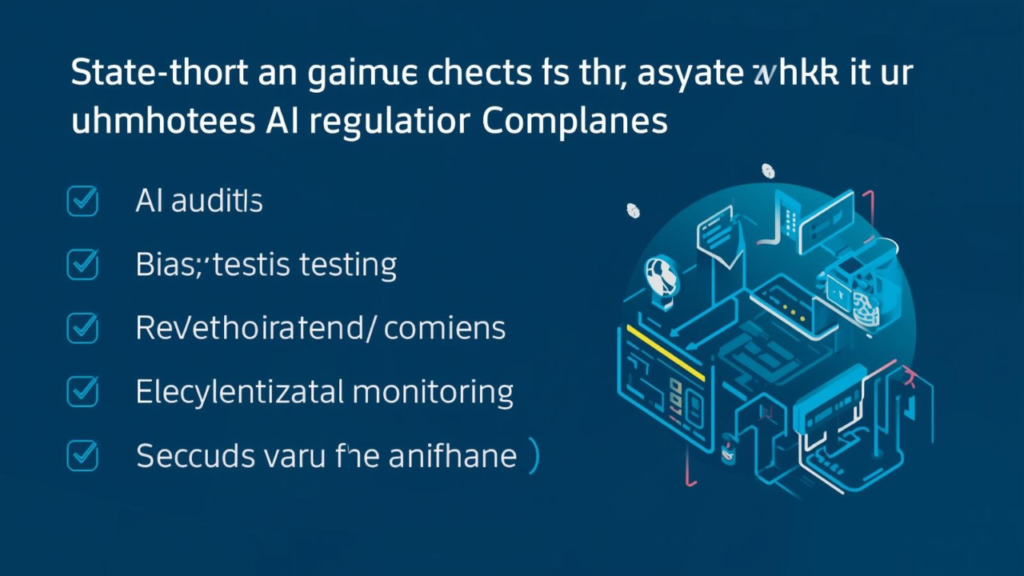
Key Elements of AI Governance
- Ethical AI principles
- Internal AI policies
- Compliance teams
- Audit mechanisms
- Continuous monitoring
By implementing governance early, businesses reduce regulatory risk significantly.
AI Regulation and Data Protection Laws
AI regulation intersects with data protection laws such as:
- GDPR
- CCPA
- LGPD
Therefore, businesses must align AI systems with privacy regulations to avoid conflicts.
AI Regulation for Small and Medium Businesses (SMEs)
SMEs often believe AI regulation applies only to large corporations. However, this is incorrect. Even small businesses using AI tools must comply.
Fortunately, SMEs can:
- Use compliant AI vendors
- Follow best-practice frameworks
- Document AI usage
AI Regulation and Generative AI for Businesses
Generative AI tools such as chatbots, content generators, and image models face growing scrutiny. Consequently, businesses must:
- Label AI-generated content
- Prevent misinformation
- Respect intellectual property The Ultimate Guide to AI Fraud Detection and Digital Security
Penalties for Non-Compliance
Non-compliance can lead to:
- Heavy fines
- Operational bans
- Legal action
- Loss of customer trust
Therefore, compliance is not just legal—it’s strategic.
Benefits of AI Regulation for Businesses
Although regulations may seem restrictive, they offer several benefits.
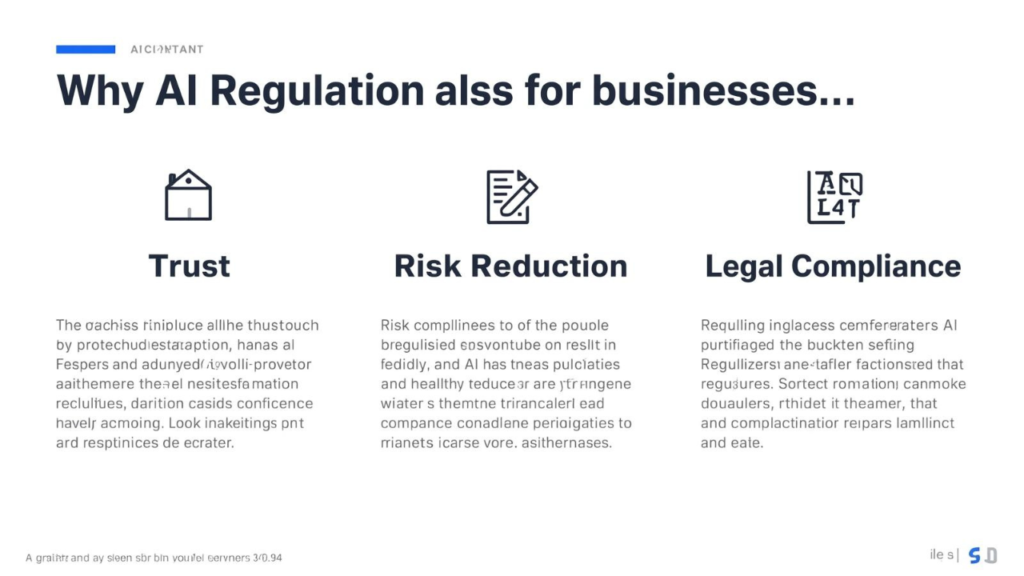
1. Increased Trust
Regulated AI builds customer confidence.
2. Reduced Risk
Compliance minimizes legal and reputational damage.
3. Competitive Advantage
Ethical AI adoption differentiates brands.
Future of AI Regulation for Businesses
AI regulation will continue evolving. Therefore, businesses should expect:
- Stricter enforcement
- Global harmonization
- Increased transparency requirements
- Mandatory AI audits
Proactive adaptation is the key to success. How to Choose and Optimize Machine Learning Datasets for AI
Call to Action – Backlink & SEO Services
Looking to boost your website rankings, authority, and organic traffic?
You’re in the right place.
I provide high-quality backlink services backed by advanced keyword research, strategic on-page SEO, and expert content writing. As a result, every backlink is not only powerful but also contextually relevant and search-engine friendly.
Moreover, I don’t believe in low-quality links. Instead, I focus on white-hat backlinks, SEO-optimized content, and data-driven keyword strategies that help your website rank higher and convert better.
🔑 My Core Skills Include:
- In-depth keyword research for SEO
- Complete on-page SEO optimization
- High-quality SEO content writing
- Authority backlink building
- Anchor text optimization
- Content-driven link placement
Therefore, if you want safe backlinks that actually improve rankings, let’s work together.
📩 Contact me today:
digitalminsa@gmail.com
👉 Let’s strengthen your SEO, increase visibility, and grow your business organically.
Frequently Asked Questions (FAQ): AI Regulation for Businesses
What is AI regulation for businesses?
AI regulation for businesses refers to laws and frameworks that govern how companies use artificial intelligence responsibly, ethically, and legally.
Why is AI regulation important for companies?
AI regulation protects users, prevents harm, ensures fairness, and reduces legal risks for businesses.
Does AI regulation apply to small businesses?
Yes, any business using AI technologies must comply, regardless of size.
What happens if a business ignores AI regulations?
Ignoring AI regulations can result in fines, bans, lawsuits, and reputational damage.
Is AI regulation the same in every country?
No, AI laws vary by region. Therefore, businesses operating globally must comply with multiple regulatory frameworks. AI Lab Announcements Explained: New Research, Models, and Industry Impact
How can businesses prepare for AI regulation?
Businesses should conduct risk assessments, implement governance frameworks, and monitor regulatory updates.
Does generative AI face regulation?
Yes, generative AI is increasingly regulated, especially regarding transparency, copyright, and misinformation.
What is the EU AI Act?
The EU AI Act is a comprehensive law that categorizes AI systems by risk and applies strict compliance requirements.
Can AI regulation improve business performance?
Yes, ethical and compliant AI builds trust, improves decision-making, and enhances brand reputation.
Will AI regulation slow innovation?
While regulation adds oversight, it ultimately promotes responsible innovation and long-term sustainability. Which AI Productivity Tools Save the Most Time in 2026?
Final Thoughts: AI Regulation Is a Business Necessity
AI regulation for businesses is not a barrier—it is a foundation for sustainable growth. Therefore, companies that embrace compliance early will gain trust, reduce risks, and stay ahead of competitors. As AI continues to evolve, regulatory awareness will define successful businesses in the digital era.













Post Comment
You must be logged in to post a comment.