AI Policy Laws and Ethics: Everything You Need to Know in 2026
Artificial intelligence is no longer an emerging technology. Instead, it has become a foundational force shaping economies, governments, and everyday life. Consequently, AI policy has moved from theoretical debate to a global priority. In 2026, policymakers, businesses, and societies are actively defining how artificial intelligence should be developed, deployed, and controlled.
Moreover, as AI systems increasingly make decisions that affect employment, healthcare, finance, education, and security, the need for clear, enforceable, and ethical AI regulations has never been greater. Therefore, understanding AI policy is essential not only for governments but also for businesses, developers, marketers, and digital leaders.
This comprehensive guide explores what AI policy is, why it matters, how global regulations differ, and how organizations can stay compliant while maintaining innovation.
What Is AI Policy?
AI policy refers to the laws, regulations, ethical principles, and governance frameworks that guide the creation and use of artificial intelligence systems. In other words, AI policy determines how AI should behave, what limitations it must follow, and who is responsible when things go wrong.
Furthermore, AI policy is not a single law. Instead, it is a combination of:
- Government regulations
- Industry standards
- Ethical guidelines
- Compliance frameworks
As a result, AI policy operates at both national and international levels.
Why AI Policy Matters More Than Ever
AI adoption has accelerated rapidly across industries. Consequently, risks have expanded alongside opportunities. Therefore, AI policy plays a critical role in ensuring technology benefits society rather than harms it. Reinforcement Learning in 2026: A Complete Beginner Guide
Key Reasons AI Policy Is Essential
First, AI policy protects human rights and privacy.
Second, it reduces bias and discrimination in automated systems.
Third, it ensures accountability and transparency.
Finally, it builds public trust in AI technologies.
Without strong AI governance, organizations risk legal penalties, reputational damage, and loss of user confidence.
The Core Objectives of AI Policy
AI policy exists to achieve several interconnected goals.
1. Responsible Innovation
Rather than stopping progress, AI policy encourages safe and ethical innovation. Clear rules allow developers to innovate without uncertainty.
2. Risk Mitigation
Additionally, AI policy helps identify and reduce risks such as:
- Algorithmic bias
- Data misuse
- Security vulnerabilities
- Unintended consequences
3. Public Trust
Moreover, transparent AI systems build confidence among users, regulators, and stakeholders.
4. Economic Stability
Finally, AI policy ensures that automation does not destabilize labor markets without safeguards and reskilling initiatives.
Key Principles of Effective AI Policy
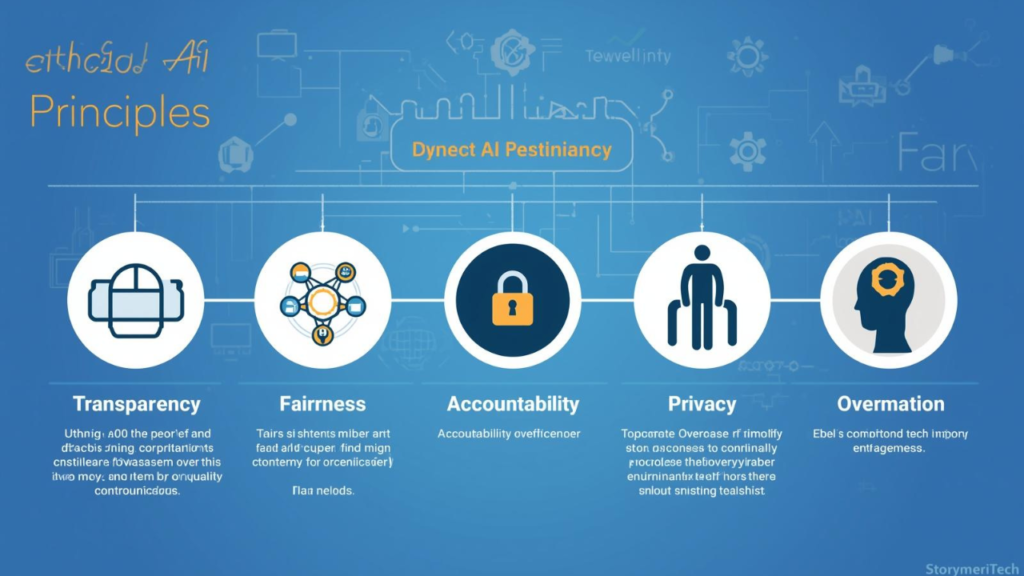
Transparency and Explainability
First and foremost, AI decisions should be understandable. Users deserve to know why an AI system produced a specific result. For example, credit scoring or hiring tools must explain outcomes clearly.
Fairness and Non-Discrimination
Equally important, AI systems must treat all individuals fairly. Since biased training data can lead to unfair outcomes, AI policy requires regular bias testing and mitigation.
Accountability and Liability
Furthermore, AI policy defines who is responsible when AI causes harm. This ensures organizations remain accountable rather than blaming automated systems.
Data Privacy and Protection
Additionally, AI relies on vast amounts of data. Therefore, AI policy aligns closely with data protection laws to safeguard personal information. What Are Transformers? Easy Explanation for Everyone
Human Oversight
Finally, AI policy emphasizes human-in-the-loop models, particularly for high-risk applications such as healthcare or criminal justice.
Global AI Policy Landscape
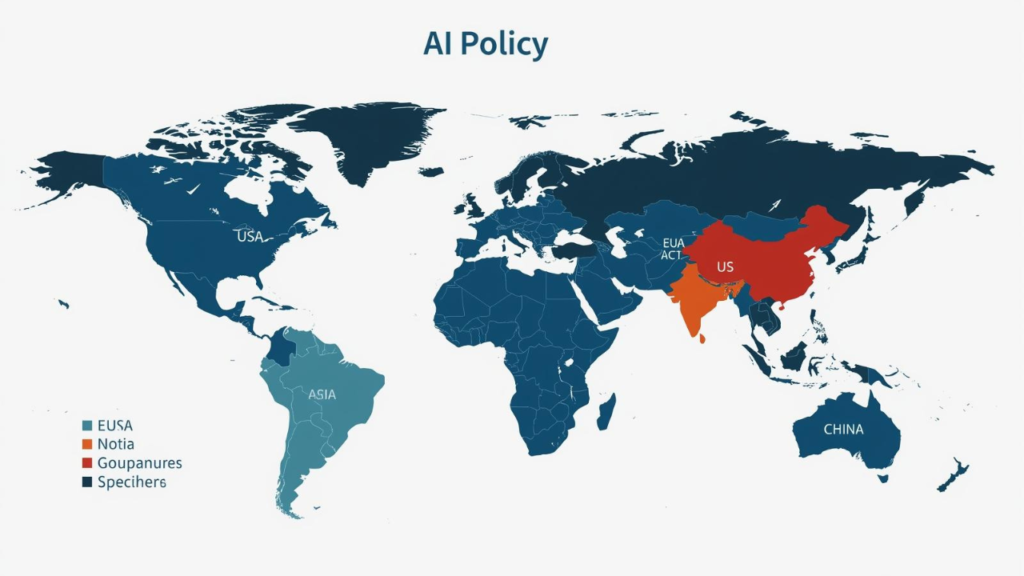
AI policy varies significantly across regions. However, global trends are emerging.

AI Policy in the United States
The United States follows a sector-based regulatory approach. Instead of one comprehensive AI law, regulations are distributed across agencies.
Key characteristics include:
- Innovation-friendly frameworks
- Emphasis on national security
- Voluntary AI risk management guidelines
Moreover, federal agencies encourage responsible AI while avoiding heavy restrictions that could slow innovation.
AI Policy in the European Union
In contrast, the European Union leads with a comprehensive and enforceable AI framework. The EU AI Act classifies AI systems based on risk.
Risk Categories in the EU AI Act
- Unacceptable risk: Prohibited systems
- High risk: Strict compliance requirements
- Limited risk: Transparency obligations
- Minimal risk: Voluntary guidelines
As a result, the EU has become the global benchmark for AI governance.
AI Policy in China
China emphasizes state oversight and content regulation. AI systems must align with national values, security objectives, and data localization requirements. AI Platform Training Made Simple: Everything You Need to Know
Consequently, AI policy in China prioritizes:
- Social stability
- Government control
- Content moderation
AI Policy in Asia-Pacific
Japan, South Korea, and Singapore focus on ethical AI frameworks supported by industry collaboration. Instead of strict enforcement, these countries promote responsible innovation through guidelines.
AI Policy and Ethical AI
Ethics are central to AI policy. Without ethical foundations, regulations lose legitimacy.
What Is Ethical AI?
Ethical AI refers to systems that:
- Respect human autonomy
- Prevent harm
- Ensure fairness
- Operate transparently
Moreover, ethical AI aligns technological progress with societal values.
AI Policy in High-Risk Industries
Healthcare
AI policy in healthcare focuses on:
- Patient safety
- Data confidentiality
- Clinical accountability
Therefore, AI diagnostic tools require rigorous validation.

Finance
In finance, AI policy addresses:
- Algorithmic transparency
- Credit fairness
- Fraud detection accountability
As a result, financial AI systems face strict oversight.
Recruitment and HR
AI hiring tools must comply with anti-discrimination laws. Consequently, organizations must audit recruitment algorithms regularly.
Law Enforcement
AI policy limits the use of facial recognition and predictive policing tools. Human oversight is mandatory in most jurisdictions. Master AI Data Mining to Unlock Hidden Insights
AI Policy and Business Compliance
For businesses, AI policy compliance is no longer optional. Instead, it is a strategic advantage.
Benefits of Compliance
- Reduced legal risk
- Increased customer trust
- Stronger brand reputation
- Easier global expansion
Moreover, compliant organizations are better prepared for future regulations.
How Businesses Can Prepare for AI Policy Compliance
Step 1: Identify AI Usage
First, organizations must map all AI systems in use.
Step 2: Conduct Risk Assessments
Next, evaluate potential risks such as bias, privacy issues, or security flaws.
Step 3: Implement AI Governance Frameworks
Additionally, create internal policies covering:
- Data usage
- Model training
- Monitoring and audits
Step 4: Maintain Documentation
Furthermore, transparency documentation ensures regulatory readiness.
Step 5: Train Teams
Finally, employee education ensures ethical AI deployment.
AI Policy and Trust in Artificial Intelligence
Trust is essential for AI adoption. Therefore, AI policy builds trust by ensuring predictability, safety, and accountability.
When users trust AI systems, adoption increases across sectors. Consequently, trust-driven AI leads to sustainable growth.
Challenges in AI Policy Implementation
Despite progress, challenges remain.
Rapid Technological Change
AI evolves faster than regulations. Therefore, policies must remain adaptable.
Global Fragmentation
Different regulations across countries increase compliance complexity.
Enforcement Difficulties
Monitoring AI behavior at scale is challenging.
Innovation vs Regulation Balance
Policymakers must avoid stifling innovation while ensuring safety.
The Future of AI Policy
Looking ahead, AI policy will become more standardized globally. International cooperation will likely create shared governance principles.
Additionally:
- AI audits will become common
- Certification frameworks will emerge
- Ethical AI will influence brand trust
Ultimately, AI policy will evolve alongside technology. AI Job Impact Explained: Risks, Skills, and New Opportunities
Long FAQ Section (SEO + AEO Optimized)
What is AI policy?
AI policy is a set of rules and guidelines governing how artificial intelligence is developed and used responsibly.
Why is AI policy important?
AI policy protects privacy, reduces bias, ensures accountability, and builds trust.
Who creates AI policy?
Governments, regulatory bodies, and international organizations create AI policies.
How does AI policy affect businesses?
It requires ethical AI use, transparency, and compliance with regulations.
What is the EU AI Act?
It is a comprehensive regulation categorizing AI systems by risk level.
Is AI policy the same worldwide?
No, AI policy varies by region, though global standards are emerging.
Does AI policy slow innovation?
No, it supports sustainable and responsible innovation.
What industries are most regulated?
Healthcare, finance, recruitment, and law enforcement. Supervised Learning in 2026: Best Methods, Models, and Uses

Can small businesses comply with AI policy?
Yes, by using transparent AI tools and following ethical guidelines.
What is the future of AI governance?
Global cooperation, audits, and standardized frameworks.
Backlane Services: AI Policy Content & SEO Experts
At Backlane Services, we specialize in turning complex AI policy topics into high-ranking, trust-focused content.
Our Core Services
- AI & Tech Keyword Research
- SEO + AEO Optimized Long-Form Content
- On-Page SEO for Authority Building
- E-E-A-T Focused Content Strategy
📧 Email: digitalminsa@gmail.com
Let Backlane Services help you rank, comply, and lead in the AI-driven digital era.
Final Thoughts
AI policy is shaping the future of artificial intelligence. Therefore, understanding regulations, ethics, and governance is no longer optional. Whether you are a business owner, policymaker, or digital marketer, staying informed about AI policy ensures long-term success, credibility, and trust.














Post Comment
You must be logged in to post a comment.