How Agentic AI Momentum is Unlocking Massive, Radical Productivity Secrets
Introduction
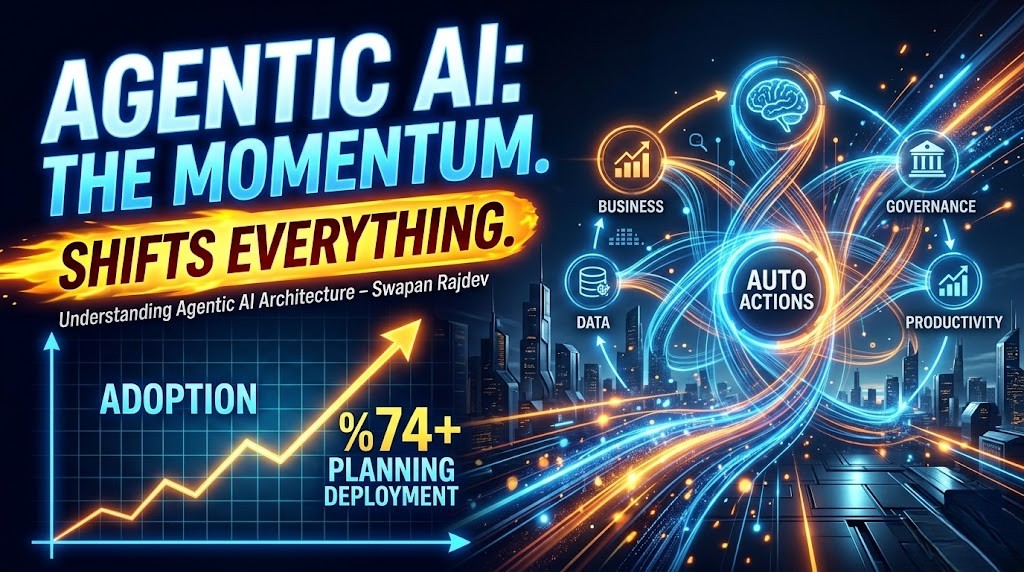
Agentic AI momentum marks a big shift in tech. These systems move beyond simple responses. Instead, they sense surroundings, think through goals, plan steps, and act on their own.
They adapt, use tools, and team up with other agents. All with little human input. In 2026, this tech drives huge productivity boosts. It changes how businesses work, make decisions, and assign roles.
However, risks like security gaps loom large. This brief draws from fresh data. It highlights trend momentum – the fast rise in adoption and innovation. This speed creates big business value but also new challenges.
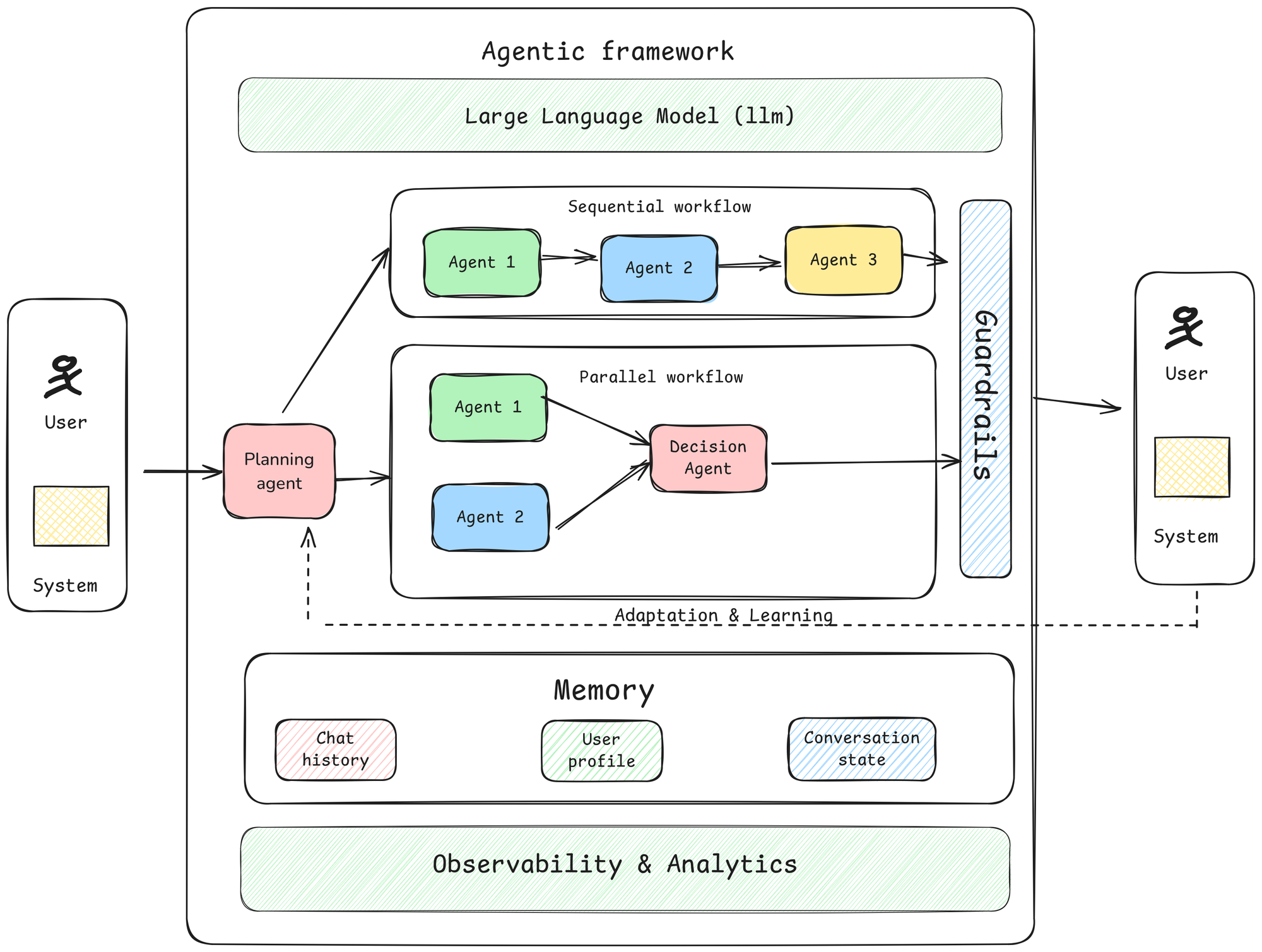
Understanding Agentic AI Architecture—Swapan Rajdev
1. Key Findings from the Last 12 Months (Agentic AI Momentum)
In the past year, agentic AI has grown fast. Many firms now use it for internal tasks. For example, a Deloitte study shows 38% are testing it. But only 11% run it in full production.
Security remains a top issue. About 40% cite it as a barrier. Tool integration also poses problems.
Moreover, ROI comes quickly. Tech leaders see it as key to survival by 2027. This drives more spending on setup.
Adoption Trends
Testing is common at 30%. Scaling hits just 14%. In health care, 47% explore it for research. This leads to revenue jumps (85%) and cost cuts (80%).
Challenges Ahead
Governance issues persist. Over half worry about privacy. Overall, adoption doubled in two years. It beats early gen AI pace.
Read More: Data Augmentation Made Simple for Beginners
2. Data and Statistics with Sources
Adoption stands at 74% planning deployment in two years. Two-thirds report clear productivity wins.
By 2028, one-third of software will have agentic AI. This makes 15% of work decisions autonomous – from zero in 2024.
Market Growth (Agentic AI Momentum)
The market hits $8.5 billion in 2026. It grows to $45 billion by 2030. North America leads with 46% share.
Enterprise Integration (Agentic AI Momentum)
By late 2026, 40% of apps embed agents. Up from under 5% in 2025. Consumers adopt for shopping (45%) and planning (41%).
However, 40% of projects may flop by 2027 due to costs. Budgets rise for 88%. Half expect over $2 million more.

Agentic AI Is Creating the Next Wave of Enterprise Applications
Read More: PyTorch Basics to Advanced: A Complete Learning Guide 2026
3. Expert Opinions and Quotes
Experts highlight proactive shifts. MIT’s Sinan Aral says, “The agentic AI age is here. Agents perform tasks at scale.”
Nvidia’s Jensen Huang sees a “multi-trillion-dollar chance.” Microsoft’s Satya Nadella notes, “Agents will be how we use computers. They understand needs and act.”
Additionally, Bill Gates adds, “Agents do more than suggest. They act.” Gartner’s Daniel O’Sullivan warns, “It changes customer service. Rethink interactions.”
Deloitte says, “65% expect new jobs in three to five years.” Andrew Ng stresses, “Small models plan, use tools, and team up.”
4. Emerging Trends and Predictions
In 2026, agents improve themselves. They handle multi-agent teams for tough workflows. They link with robots too.
Predictions show 80% of customer issues fixed alone by 2029. Costs drop 30%.
Tech Advances
Edge AI and special chips rise. “Super agents” get control layers. By 2028, 15% decisions are auto.
Multi-systems manage chains. Agent economy may top human output. Voice agents scale. Pipeline costs fall to $0.016 per minute.
Yet 40% projects may cancel by 2027.
Agentic AI Trends 2026: Complete Future Guide
5. Controversial Viewpoints or Debates
Debates focus on ethics and hype. Critics say it spreads bias from data. This harms hiring or policing.
Privacy fears grow from tracking and data sales. Some call it overblown. “Agent washing” fakes true skills.
Job Impacts (Agentic AI Momentum)
Job loss myths fade. It makes new roles. But 60% need new skills. Liability questions remain. Who owns errors in linked systems?
Proponents say it boosts humans. Skeptics warn of waste in wrong uses. Also, AI makers setting values risks harm.
6. Practical Implications for Trend Momentum
Trend momentum is strong. 94% see it as key. Budgets jump $2 million for half. This demands quick workflow changes to stay ahead.
Operational Shifts
Redesign around APIs and tracking. Shift staff to oversight and ethics. Set rules for risks like drift.
Business Benefits
Expect 30% ops cost savings. New income from auto choices. But old systems cause 40% failures. Start with checks and tests.
Moreover, it aids hybrid work and smooth flows. Balance auto with human checks for trust.
Read More: Text-to-Speech:A simple and Complete AI Voice Guide for 2026
7. FAQs
What is agentic AI?
Agentic AI acts on its own to meet goals. It plans and executes tasks.
How does agentic AI differ from traditional AI?
Traditional AI reacts to inputs. Agentic AI thinks ahead and adapts.
Why is agentic AI important in 2026?
It embeds in 40% of apps. 80% of firms see it as vital for survival.
What are the benefits of agentic AI for businesses?
It boosts speed and cuts costs by 30%. It handles complex work.
What risks come with agentic AI?
Bias, privacy leaks, and error liability. 40% projects may fail.
How can companies adopt agentic AI?
Start with pilots. Focus on governance and training.
Will agentic AI replace jobs in 2026?
No. It creates roles. 65% expect new jobs, but upskilling is key.
What industries benefit most from agentic AI?
Health, finance, and manufacturing. They see fast ROI.
How does agentic AI impact productivity?
It automates 80% of routine tasks. Decisions become faster.
What future trends shape agentic AI?
Multi-agent teams and self-improvement. Market grows to $45B by 2030.













Post Comment
You must be logged in to post a comment.