
AI in Data Science Explained: Everything You Need to Know
Introduction
AI in data science is changing how people collect, study, and use data. Today, businesses need quick and smart decisions. Therefore, artificial intelligence helps experts find useful patterns faster. Moreover, it reduces manual work and improves accuracy. Many industries now depend on AI for better results. For example, healthcare, finance, retail, and education use it every day. As a result, companies solve problems more efficiently. This guide explains its benefits, tools, uses, challenges, and future. Furthermore, you will learn why AI has become an important part of modern data science.
“Data becomes valuable when it leads to smart decisions.”
What Is AI in Data Science?
Artificial intelligence allows machines to learn from data. Meanwhile, data science focuses on collecting, cleaning, and studying information. Together, they create powerful solutions. Therefore, experts can discover trends with less effort.
AI studies large datasets quickly. Moreover, it finds hidden patterns that humans may miss. As a result, organizations make better choices using reliable information.
Instead of checking every record manually, AI performs the work automatically. Consequently, professionals save time and improve productivity.
Why AI Matters
Modern businesses generate huge amounts of data daily. However, handling that data manually is difficult. Therefore, AI provides faster analysis and better predictions.
Moreover, AI improves decision-making by reducing human errors. In addition, it supports real-time analysis across many industries.
Key Reasons
- Speeds up data analysis
- Improves prediction accuracy
- Reduces manual tasks
- Detects hidden trends
- Supports faster decisions
- Handles large datasets
- Saves business costs

How AI Works
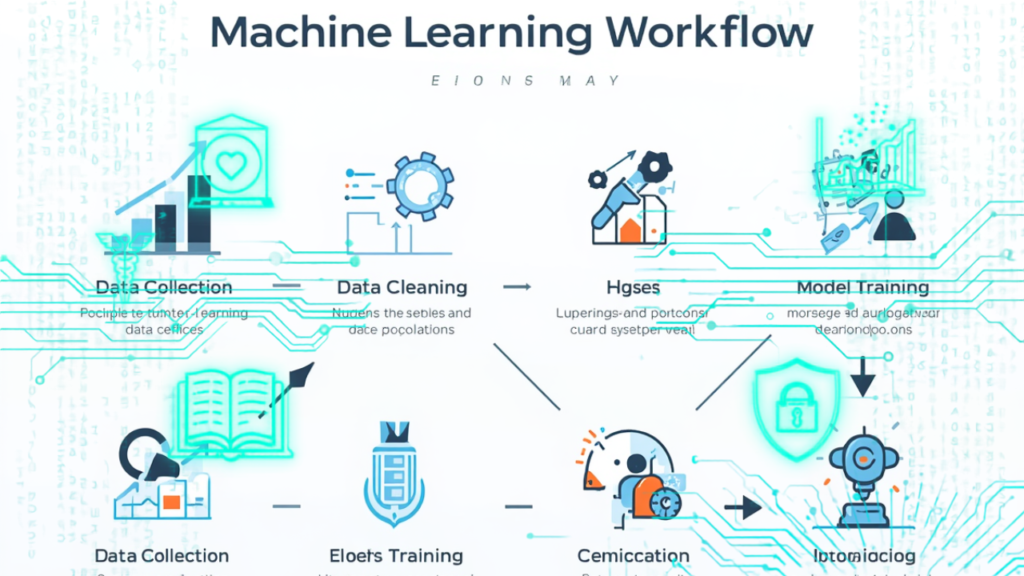
AI follows several simple steps. First, it collects data from different sources. Next, it cleans incorrect information. Then, machine learning models study the data.
After that, the system predicts future outcomes. Finally, experts review the results before making decisions.
Therefore, every stage improves the overall quality of data analysis.
Table 1: AI Process in Data Science
| Step | Purpose |
|---|---|
| Data Collection | Gather useful information |
| Data Cleaning | Remove incorrect data |
| Data Analysis | Find important patterns |
| Model Training | Learn from data |
| Prediction | Estimate future results |
| Decision Making | Support business actions |
Benefits of AI
AI offers many advantages. Therefore, businesses continue investing in modern technologies. Moreover, these benefits improve both speed and quality.
Major Benefits
- Faster data processing
- Better accuracy
- Lower business costs
- Improved customer service
- Real-time insights
- Better forecasting
- Less repetitive work
Furthermore, AI continues learning from new information. As a result, its predictions improve over time.
“Better data creates better decisions.”
Popular AI Techniques
Several AI methods support data science. Although each method serves a different purpose, they often work together.
Machine Learning
Machine learning learns from previous data. Therefore, predictions become more accurate over time.
Deep Learning
Deep learning uses advanced neural networks. Moreover, it performs well with images, videos, and speech.
Natural Language Processing
Natural Language Processing helps computers understand written language. Consequently, businesses analyze customer feedback quickly.
Computer Vision
Computer vision allows machines to study images. Therefore, hospitals and factories improve inspection processes.

Common Applications
Many industries benefit from AI every day. Consequently, organizations increase productivity while reducing costs.
Healthcare
Doctors analyze medical reports faster. Moreover, AI helps identify diseases earlier.
Banking
Banks detect unusual transactions quickly. Therefore, fraud decreases significantly.
Retail
Stores study customer behavior carefully. As a result, they recommend suitable products.
Education
Learning platforms personalize lessons. Furthermore, students receive better support.
Manufacturing
Factories monitor equipment continuously. Consequently, maintenance becomes easier.
Marketing
Businesses study customer interests. Therefore, campaigns become more effective.
Table 2: AI Applications Across Industries
| Industry | Common Use |
|---|---|
| Healthcare | Disease prediction |
| Banking | Fraud detection |
| Retail | Product recommendations |
| Education | Personalized learning |
| Manufacturing | Predictive maintenance |
| Marketing | Customer analysis |
| Agriculture | Crop monitoring |
| Transportation | Route optimization |
Best AI Tools
Many tools support modern data science projects. Moreover, each tool offers different strengths.
| Tool | Main Purpose |
|---|---|
| Python | Data analysis |
| TensorFlow | Deep learning |
| Scikit-learn | Machine learning |
| Apache Spark | Big data processing |
| Tableau | Data visualization |
| Power BI | Business reporting |
Therefore, professionals often combine several tools for better performance.
Challenges
Although AI provides many benefits, several challenges remain.
Data quality affects results greatly. Therefore, incorrect information creates poor predictions.
Moreover, privacy concerns continue growing. Consequently, companies must protect sensitive information.
In addition, AI models sometimes become difficult to explain. Therefore, experts work to improve transparency.
Another challenge involves high computing costs. However, cloud technology reduces these expenses.
“Clean data is the foundation of every successful AI system.”
Skills You Need
Learning AI requires several important skills. Fortunately, beginners can develop them step by step.
Useful skills include:
- Python programming
- Basic statistics
- Data visualization
- Machine learning
- Critical thinking
- Problem solving
- Database knowledge
Furthermore, continuous learning helps professionals stay competitive.
AI and Big Data
Big data contains huge amounts of information. However, studying it manually takes too much time.
Therefore, AI processes millions of records quickly. Moreover, it identifies valuable trends automatically.
As a result, organizations respond faster to market changes.

AI and Automation
Automation removes repetitive tasks. Meanwhile, AI improves decision-making during those tasks.
Consequently, employees spend more time solving complex problems. In addition, businesses improve overall productivity.
“Artificial intelligence works best when combined with human knowledge.”
Future of AI in Data Science
The future of AI in data science looks bright. New tools appear every year. Therefore, businesses continue improving their data strategies. Moreover, AI systems become faster and more reliable.
Many companies now use cloud platforms for AI projects. As a result, they reduce hardware costs. Furthermore, cloud services allow teams to work from different locations.
Automation will also continue growing. Consequently, professionals will spend less time on routine tasks. Instead, they will focus on solving business problems.
In addition, explainable AI will become more important. Businesses want to understand every decision. Therefore, developers are building models that are easier to explain.
Healthcare will also benefit from future AI systems. Doctors will receive better decision support. Moreover, patients may receive faster diagnoses and improved treatments.
Financial companies will strengthen fraud detection. Consequently, customers will enjoy safer banking services.
Retail businesses will improve customer experiences. Therefore, shoppers will receive more personalized recommendations.
Meanwhile, manufacturers will predict equipment failures earlier. As a result, companies will reduce downtime and maintenance costs.
Education will also continue changing. AI will personalize lessons even further. Consequently, students will learn at their own pace.
Overall, AI will remain a major force in modern data science.
Best Practices
Using AI correctly improves results. Therefore, every organization should follow proven practices.
First, collect accurate data. Clean data produces better predictions.
Next, choose the right AI model. Different tasks need different approaches.
Moreover, protect customer information. Strong security builds trust.
Furthermore, test AI models regularly. Continuous testing improves performance.
In addition, monitor results carefully. Businesses should update models whenever needed.
Finally, train employees regularly. Skilled teams use AI more effectively.
Following these practices helps organizations gain better results while reducing risks.
Conclusion
AI in data science continues changing how organizations work with information. Therefore, businesses make faster and smarter decisions. Moreover, AI reduces manual work while improving accuracy.
Many industries already depend on AI every day. For example, healthcare, banking, education, retail, and manufacturing use it to improve services. As a result, customers receive better experiences, and companies increase productivity.
Although some challenges remain, AI continues improving rapidly. Furthermore, better tools make adoption easier for businesses of every size.
Learning AI today creates valuable opportunities for tomorrow. Consequently, professionals who build these skills will stay competitive in a data-driven world.

Frequently Asked Questions
1. What is AI in data science?
AI in data science combines artificial intelligence with data analysis to find patterns and make predictions.
2. Why is AI important in data science?
AI speeds up analysis, improves accuracy, and supports better business decisions.
3. Which industries use AI in data science?
Healthcare, banking, retail, education, manufacturing, and marketing use AI extensively.
4. What programming language is best for AI?
Python is the most popular language because it offers many AI libraries.
5. Is AI replacing data scientists?
No. AI supports data scientists by automating routine tasks. Human expertise remains essential.
6. What skills are needed for AI in data science?
Python, statistics, machine learning, databases, and data visualization are valuable skills.
7. Can beginners learn AI?
Yes. Beginners can start with basic programming and gradually learn machine learning concepts.
8. What are the biggest challenges?
Poor data quality, privacy concerns, high computing costs, and model transparency are common challenges.
9. Which AI tools are widely used?
TensorFlow, Scikit-learn, Python, Apache Spark, Tableau, and Power BI are popular choices.
10. What is the future of AI in data science?
The future includes smarter automation, better predictions, explainable AI, and wider business adoption.
Call to Action
Ready to learn more about artificial intelligence and modern technology? Explore more expert guides, practical tutorials, and the latest AI trends to expand your knowledge. If you have questions, feedback, or collaboration ideas, feel free to reach out at http.areesha@gmail.com. Your next step in understanding AI starts today.
About the Author
Areesha is an SEO content writer who creates simple, informative, and reader-friendly articles about artificial intelligence, data science, machine learning, and emerging technology. She focuses on writing clear guides that help beginners and professionals understand complex topics with ease. Her goal is to deliver accurate, engaging, and high-quality content that provides real value while following modern SEO best practices.









Post Comment
You must be logged in to post a comment.