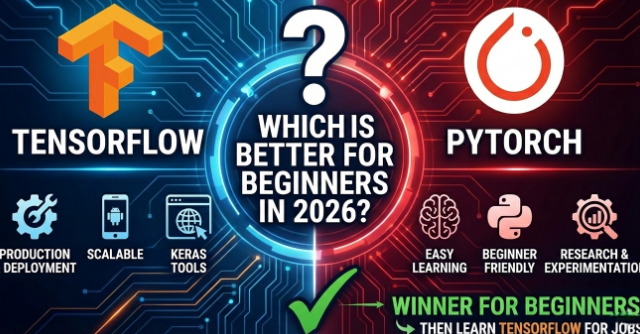
TensorFlow vs PyTorch: Which Is Better for Beginners?
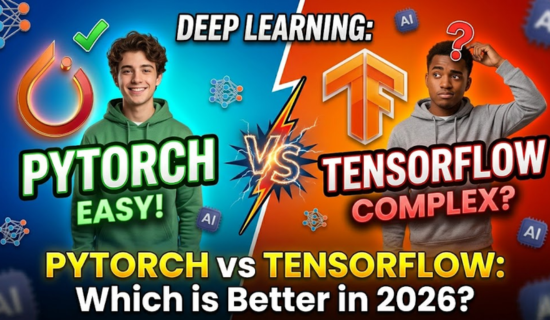
If you are starting your journey in artificial intelligence and machine learning, then naturally, one of the first questions you’ll face is: TensorFlow vs PyTorch — which is better for beginners?
Both frameworks are powerful, widely used, and beginner-friendly in different ways. However, choosing the right one can make your learning journey much smoother.
In this guide, we’ll compare TensorFlow and PyTorch in simple terms so beginners can decide which framework to learn first.
What Is TensorFlow?
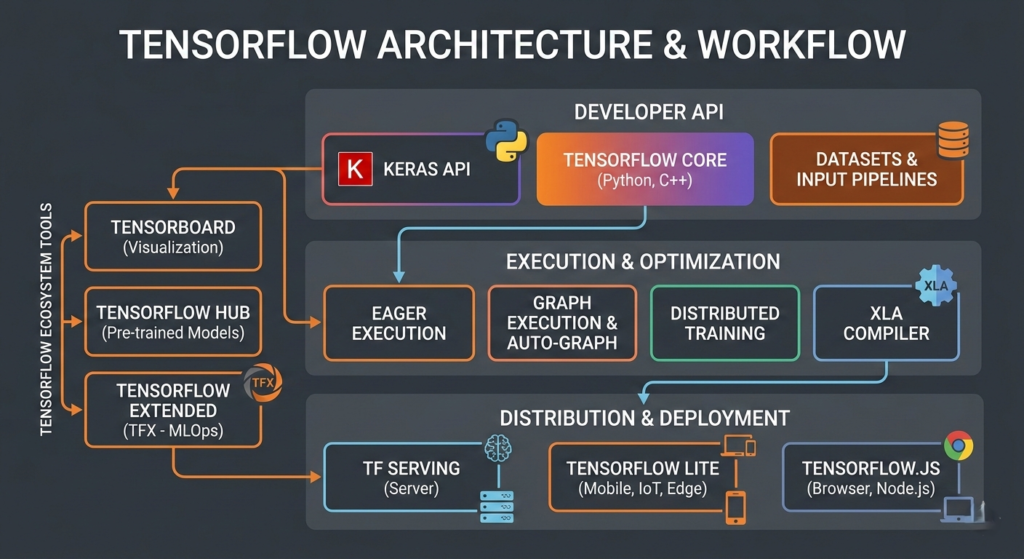
TensorFlow is an open-source machine learning framework developed by Google. Over the years, it has become widely used for building deep learning models, neural networks, and AI applications. As a result, it is now considered one of the most powerful tools in the AI industry.
TensorFlow is popular for:
- To begin with, it supports production-ready AI systems
- Moreover, it handles large-scale machine learning projects efficiently
- In addition, it allows mobile and web deployment
- Finally, it is widely used for enterprise AI applications
It offers tools like Keras that make it easier for beginners to build models quickly.
Read More: Understanding Ai Monitization: Make Money Artificial Intelligence
What Is PyTorch?
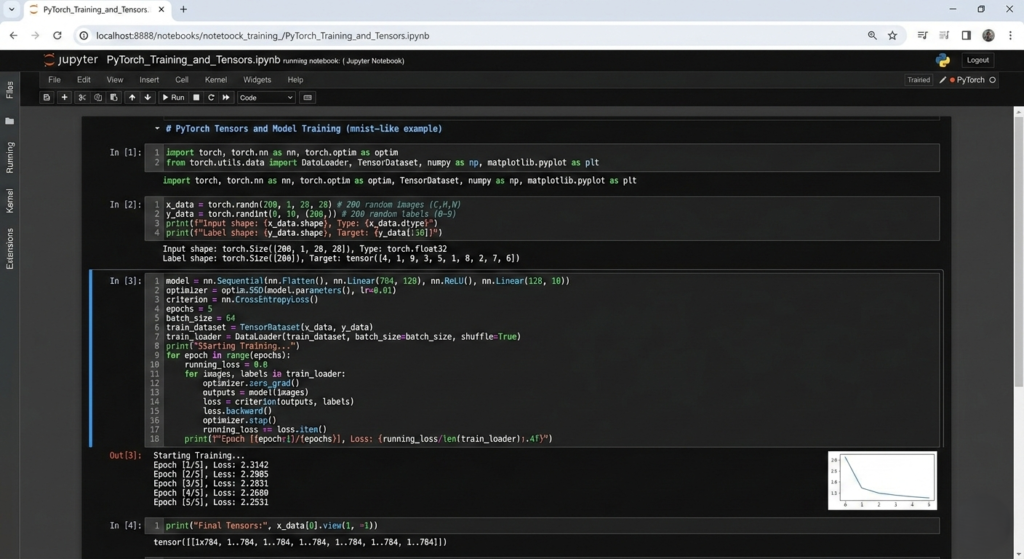
PyTorch is an open-source deep learning framework developed by Meta (Facebook). Over time, it has become widely known for its simplicity, flexibility, and strong support in the research community. Because of these advantages, many beginners and researchers prefer using it for learning and experimentation.
PyTorch is popular for:
- First of all, easy learning for beginners
- In addition, strong support for research and experimentation
- Moreover, clean and readable code structure
- As a result, fast and efficient prototyping
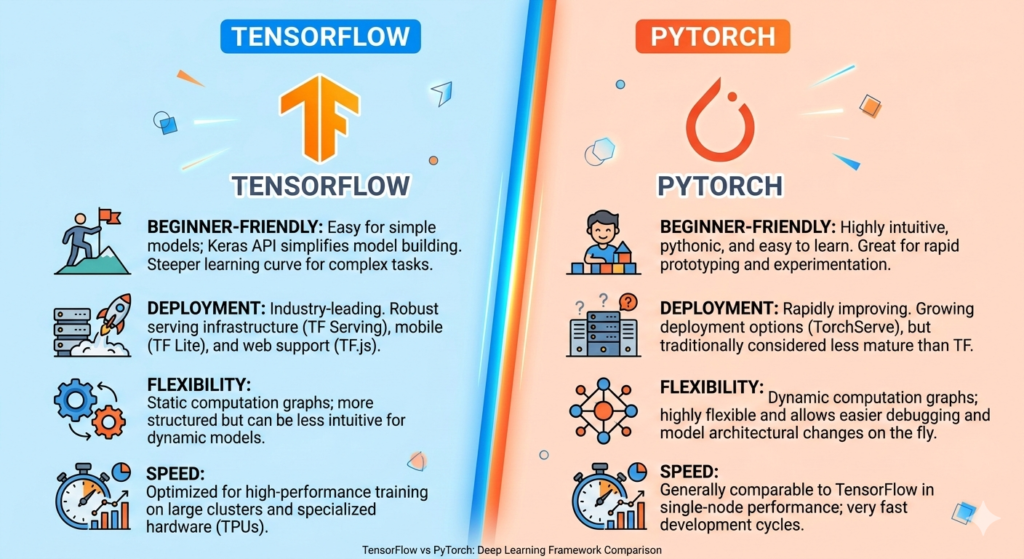
Many universities now teach PyTorch first because it feels more like standard Python coding.
Read More: PyTorch Basics to Advanced: A Complete Learning Guide 2026
TensorFlow vs PyTorch: Key Differences
1. Ease of Learning
For beginners, ease of learning is the most important factor.
PyTorch:
- Very beginner-friendly
- Simple syntax
- Feels like normal Python
- Easy debugging
TensorFlow:
- Slightly complex at first
- More structured
- Easier when using Keras
- Better for long-term scaling
- Winner for beginners: PyTorch
2. Community and Learning Resources
Both frameworks have huge communities and tutorials online.
PyTorch:
- Popular in universities
- Strong research community
- Many beginner tutorials
TensorFlow:
- Large developer community
- Extensive documentation
- Google support
👉 Winner: Both are strong
Read More: Data Augmentation Made Simple for Beginners
3. Real-World Job Opportunities
If your goal is getting a job in AI or machine learning, this matters.
TensorFlow:
- Used in production systems
- Popular in companies
- Good for deployment
PyTorch:
- Growing fast in industry
- Very popular in research
- Now used in companies too
👉 Winner: TensorFlow slightly leads in jobs, but PyTorch is catching up fast.
4. Flexibility and Experimentation
PyTorch:
- Very flexible
- Easy to test ideas
- Great for experiments
TensorFlow:
- More structured
- Better for large-scale apps
- Strong deployment tools
👉 Winner: PyTorch
5. Performance and Deployment
TensorFlow:
- Best for production deployment
- Mobile and web support
- Scalable systems
PyTorch:
- Great for research
- Production support improving
👉 Winner: TensorFlow for deployment
Which Is Better for Beginners (TensorFlow vs PyTorch)?
If you are completely new to machine learning, most experts recommend:
Start with PyTorch
Why?
- Easier to understand
- Simple syntax
- Faster learning
- Great for beginners
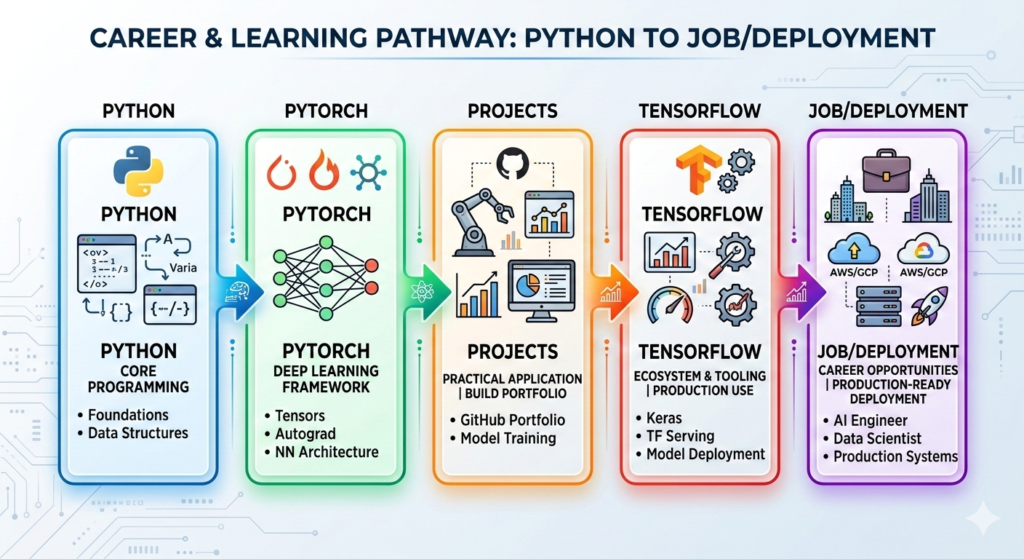
After learning basics, you can also learn TensorFlow for production-level projects.
When Should You Choose TensorFlow?
To start with, it is ideal for building AI-powered mobile applications
Furthermore, it is suitable for those targeting careers in large tech companies
In addition, it works well for real-world production and deployment needs
Finally, it is helpful for beginners who want to learn through Keras
When Should You Choose PyTorch?
Choose PyTorch if:
- To begin with, it is perfect for those starting their journey in AI
- In addition, it offers a simple and easy learning curve
- Moreover, it is ideal for learners who enjoy coding in Python
- As a result, it becomes great for experimenting and learning quickly
Final Verdict: TensorFlow vs PyTorch for Beginners
For most beginners in 2026:
Greae framework to start: PyTorch
Best for production: TensorFlow
Best approach: Learn PyTorch first, then TensorFlow
Both frameworks are excellent. The best choice depends on your learning style and career goals.
Read More: Coursera: Complete Guide to Online Courses and Degrees
FAQs
1. Should beginners learn TensorFlow or PyTorch first (TensorFlow vs PyTorch)?
Beginners should start with PyTorch because it is easier to understand and more beginner-friendly.
2. Is TensorFlow harder than PyTorch (TensorFlow vs PyTorch)?
Yes, TensorFlow can feel slightly harder at first, but using Keras makes it easier.
3. Which framework is better for jobs (TensorFlow vs PyTorch)?
TensorFlow is widely used in companies, but PyTorch is rapidly growing and also valuable for jobs.
4. Can I learn both TensorFlow and PyTorch (TensorFlow vs PyTorch)?
Yes. Many developers learn PyTorch first for basics and then TensorFlow for production projects.
5. Which framework is better in 2026 (TensorFlow vs PyTorch)?
Both are powerful. PyTorch is best for learning, and TensorFlow is best for deployment.
6. Is it easy to move from one framework to another later?
In most cases, yes, it becomes easier over time. Once you understand core machine learning concepts, switching between frameworks is not very difficult. For example, after learning how models and neural networks work, you can adapt to another tool with practice. As a result, many learners begin with one framework and gradually explore the other as their skills grow.
7. Which framework supports long-term growth in AI learning?
At the beginning, both frameworks help build strong foundations. However, as learners progress, their needs may change. On one hand, TensorFlow is often useful for large-scale and production-ready systems. On the other hand, PyTorch remains popular for experimentation and research. Consequently, long-term growth depends on the direction you plan to take in AI.
8. How quickly can a beginner become confident using these tools?
Generally speaking, beginners start understanding the basics within a few weeks of regular practice. After that, consistent project building and experimentation improve confidence. Moreover, by following tutorials and applying concepts step by step, learners can gradually move from beginner level to intermediate skills without feeling overwhelmed.
9. What should you learn before diving into any AI framework?
Before choosing a framework, it is important to build a strong base in Python and basic machine learning concepts. Once those fundamentals are clear, learning any framework becomes much smoother. In other words, focusing on core knowledge first will make it much easier to understand both tools and use them effectively later on.
Ready to Start Your AI Journey?
Whether you choose TensorFlow or PyTorch, the most important step is to start building and practicing today. Don’t wait for the perfect moment, your future in AI begins with the first line of code.
If you found this guide helpful, share it with friends who are learning machine learning and bookmark it for later. More beginner-friendly AI and blogging guides are coming soon!
📩 Want help with SEO articles, blogging, or AI topics?
Feel free to reach out anytime: writerzarirah@gmail.com
Let’s grow, learn, and build something amazing together!









Post Comment
You must be logged in to post a comment.