Reinforcement Learning in 2026: A Complete Beginner Guide
Introduction
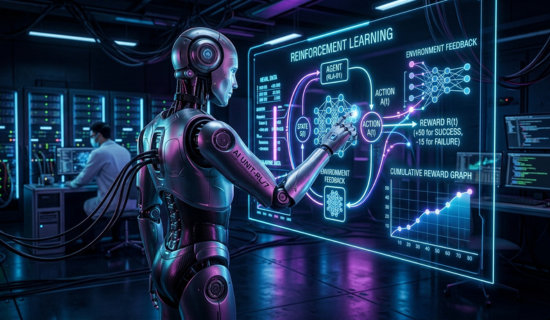
Reinforcement learning is growing very fast in artificial intelligence. In 2026, it plays a very big role in how machines learn, think, and make decisions. Because of this, it has become an important part of modern AI systems.
In simple terms, this method helps machines learn from actions and feedback. As a result, many industries now use it to build smart and adaptive systems.
This guide is made especially for beginners. Moreover, the language is very simple and easy to understand. So, even if you are new to AI, you can learn it step by step without confusion.
In this article, you will learn:
- What reinforcement learning is
- How it works
- Why it matters in 2026
- Types of this method
- Popular algorithms
- Real-world uses
- Challenges and future trends
- How to start learning
Now let’s begin step by step.
What Is Reinforcement Learning?
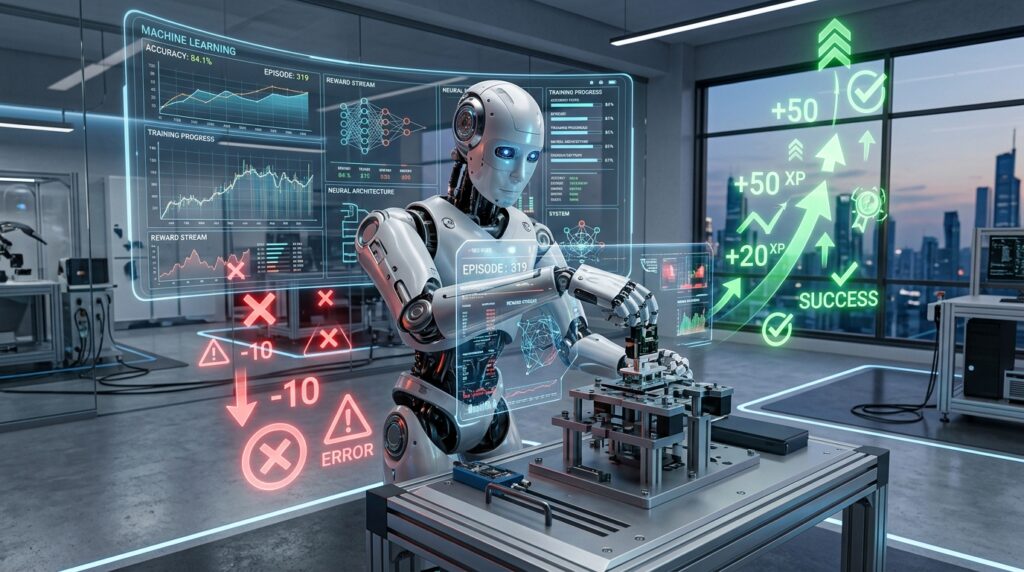
Reinforcement learning is a type of machine learning. In this method, a machine learns by interacting with its environment. Then, it gets feedback based on its actions.
This feedback comes in two forms. First, rewards for good actions. Second, penalties for bad actions.
So, the system slowly learns what works and what does not. Over time, it becomes smarter and more accurate.
For example, think about a child learning to ride a bicycle. At first, the child falls and makes mistakes. However, with practice, the child improves step by step.
In the same way, machines also learn through practice and experience.
Unlike supervised learning, this method does not need labeled data. Instead, it learns directly from experience. Therefore, it becomes more flexible and powerful.
In simple words, reinforcement learning is learning by doing and improving over time.
Read more: Text-to-Speech: A Complete Guide for Better Digital Content
Why Reinforcement Learning Matters in 2026?
Technology is changing very fast. Because of this, fixed rule systems are no longer enough.
Today, AI systems must adapt quickly. Therefore, this learning method is very important in 2026.
Many companies now use it to automate tasks. In addition, it helps improve performance and reduce costs. As a result, businesses become more efficient.
Moreover, it is used in many modern fields, such as:
- Self-driving cars
- Smart robots
- AI games
- Healthcare systems
- Finance systems
- Recommendation engines
For example, self-driving cars must make fast decisions. They must understand roads, traffic, and people. So, this method helps them learn from real driving experience.
Similarly, robots use reinforcement learning to improve movement and perform tasks more safely.
In addition, companies are investing more in this technology. As a result, the demand for experts is increasing quickly.
Read more: Knowledge Distillation: A Simple Guide for Better AI
Core Components of Reinforcement Learning
Every system has some important parts. Each part plays a key role.
So, let’s understand them one by one.
Agent
The agent is the learner. It takes actions and makes decisions.
For example, in a game, the player is the agent.
So, the agent is the main part of the system.
Environment
The environment is everything around the agent. It reacts to actions and gives feedback.
For example, in self-driving cars, roads, traffic lights, and people are part of the environment.
However, the environment is always changing. So, the agent must keep adapting.
Reward System
Rewards show success. Good actions get rewards. Bad actions get penalties.
So, the system understands what is right and what is wrong.
As a result, learning becomes better over time.
Read more: New AI Tools Launched in 2025 — The Ultimate Guide
Policy in Reinforcement Learning
A policy is a rule for making decisions. It tells the agent what to do next.
Better policies give better results.
Therefore, improving the policy is very important.
Goal
The goal is the final target of the system.
Everything works to achieve this goal.
So, the system keeps improving until it reaches success.
How It Works

At the start, the agent knows nothing. So, it begins by taking random actions.
Then, the environment responds. After that, feedback is given.
Slowly, the system learns which actions are good.
This process repeats many times. Over time, the system becomes better and smarter.
Now let’s break the process into steps:
- First, the agent takes an action
- Then, the environment responds
- After that, feedback is given
- Next, the system updates learning
- Finally, the process repeats again
As a result, the system slowly learns the best behavior.
Exploration vs Exploitation
In this method, two important ideas exist.
So, let’s understand both.
Exploration
Exploration means trying new actions.
For example, a robot may try different paths.
So, it can discover better solutions.
Exploitation
Exploitation means using known good actions.
However, using only old actions is not enough.
So, balance is very important.
If there is too much exploration, learning becomes slow. But if there is too much exploitation, improvement stops.
Therefore, both must be balanced carefully.
Read more: Top Skills You NEED to Become a Successful Artificial Intelligence Trainer
Types of Reinforcement Learning
There are different types of this learning method.
Each type solves different problems.
So, let’s understand them.
Model-Based Learning
In this type, the system builds a model of the environment.
Then, it predicts what will happen before taking action.
So, planning becomes easier.
As a result, learning can become faster.
However, building a good model is difficult. Therefore, beginners may find it hard.
Still, it is useful in many advanced systems.
Model-Free Learning
In this type, no model is created.
Instead, the system learns directly from experience.
So, it is simple and widely used.
Most beginners start with this type.
Because of this, it is very popular in real-world systems.
Popular Algorithms of Reinforcement Learning
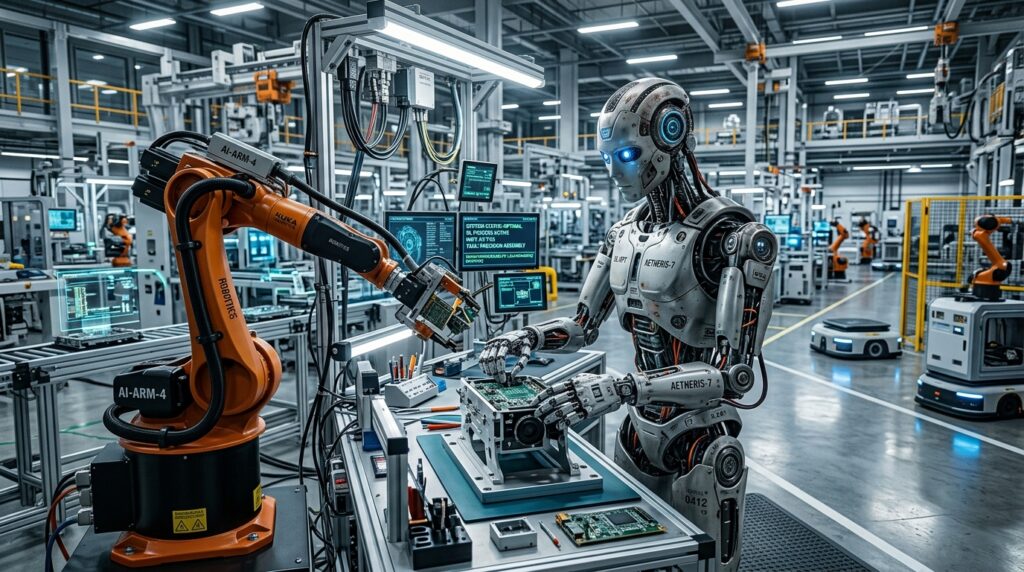
Algorithms are the base of this learning method.
Different algorithms solve different problems.
So, let’s look at the most common ones.
Q-Learning in Reinforcement Learning
Q-Learning is one of the simplest algorithms.
It learns the value of actions in different situations.
So, it is easy for beginners.
Read more: Predictive Analytics Made Simple for Modern Businesses
Deep Q-Networks (DQN)
DQN uses deep learning with this method.
So, it can solve complex problems.
For example, it is used in gaming AI.
Policy Gradient Methods
These methods directly learn the best actions.
So, they work well in continuous problems.
Because of this, robots often use them.
Actor-Critic Methods
This method has two parts.
The actor takes actions. The critic checks them.
So, learning becomes more stable and fast.
Comparison With Reinforcement Learning and Other Learning Types
Machine learning has different types.
However, this one is different from others.
Supervised Learning
It uses labeled data.
So, it learns from correct answers.
Read more: Supervised Learning in 2026: Best Methods, Models, and Uses
Unsupervised Learning
It finds patterns in data.
However, it does not use labels.
Read more: Unsupervised Learning in AI: A Clear & Easy Guide
This Method
It learns from rewards and mistakes.
So, it is best for decision-making tasks.
Real-World Uses in Reinforcement Learning
This method is used in many industries.
So, it is very important today.
Self-Driving Cars

Cars learn how to drive safely.
So, they improve over time.
Robotics
Robots learn movement and tasks.
So, they become more efficient.
Gaming
AI becomes smarter in games.
So, games feel more real.
Healthcare
AI helps doctors in decisions.
So, treatment becomes better.
Finance
AI studies market patterns.
So, trading improves.
Recommendation Systems
Systems suggest content to users.
So, user experience improves.
Challenges in Reinforcement Learning
There are some problems in this field.
First, training takes a long time.
Second, it needs strong computing power.
Also, reward design is difficult.
However, new methods are improving these issues.
So, progress continues.
Read more: AI Model: A Simple Guide to Modern AI Systems
Future Trends in Reinforcement Learning

The future is very bright.
AI is growing fast every year.
So, this method will grow even more.
It will power:
- Smart cities
- Robots
- Healthcare systems
- Self-driving cars
- AI assistants
So, job opportunities will also increase.
FAQs About Reinforcement Learning
What is reinforcement learning?
Reinforcement learning is a way machines learn from actions and feedback.
Is reinforcement learning hard to learn?
No. Beginners can learn it step by step with practice.
Where is reinforcement learning used?
It is used in robots, games, self-driving cars, and AI systems.
Does reinforcement learning need coding?
Yes. Python is the most common language for it.
Is math important for reinforcement learning?
Basic math helps. Advanced math can come later.
Why is reinforcement learning important?
It helps machines make smart decisions and improve over time.
Can beginners learn reinforcement learning?
Yes. Anyone can start with simple concepts and small projects.
What is the best language for reinforcement learning?
Python is the best and most popular choice.
Is reinforcement learning used in real life?
Yes. Many companies use it in healthcare, finance, gaming, and robotics.
What is the future of reinforcement learning?
The future is very bright. More industries will use it in coming years.
Read more: AI Tracking Explained: Everything You Need to Know
Final Thoughts
This field is changing the future of AI.
In 2026, reinforcement learning is very important.
At first, it may look difficult.
However, anyone can learn it step by step.
So, keep learning, stay consistent, and practice daily.
The future belongs to smart machines 🚀
Call To Action
Need SEO content that ranks on Google and keeps readers engaged?
I create:
- SEO blog posts
- Keyword-focused articles
- Human-style content
- Easy-to-read blogs
- High-engagement website content
Let’s build content that performs.
📧 Email: craziya167@gmail.com
📱 WhatsApp: +92 371 4778412
Author Bio:
Raziya is an SEO content writer who specializes in AI, technology, and digital marketing topics. Her goal is to create clear, engaging, and easy-to-understand content for online readers.














Post Comment
You must be logged in to post a comment.